AI for Compliance: How to Monitor Policies Without a Full-Time Compliance Officer

Compliance costs U.S. businesses an average of $10,000 per employee per year. For a 20-person company, that's $200,000 before anyone gets fined for anything. And 51% of small businesses say regulatory compliance is actively hurting their growth, according to the U.S. Chamber of Commerce's 2024 Small Business Index.
The obvious solution is hiring a compliance officer. The problem: the BLS median salary for that role is $78,420, and chief compliance officers at smaller companies average $202,000 in total compensation (BarkerGilmore, 2024). For most small businesses, that math doesn't work.
AI compliance monitoring tools offer a different path. They won't replace human judgment on complex regulatory questions, but they will handle the 60% of compliance work that's manual, repetitive, and drowning your team, according to EY research on how compliance officers actually spend their time.
What Compliance Actually Costs Small Businesses
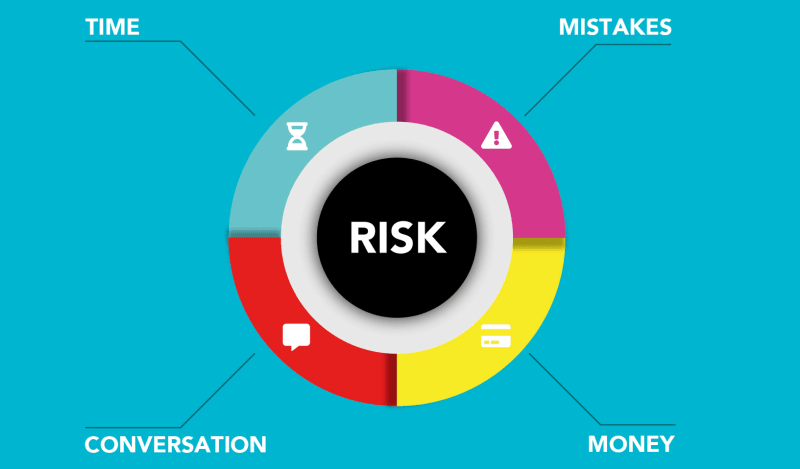
The numbers get worse the smaller you are. 69% of small businesses spend more per employee on compliance than their larger competitors, per the U.S. Chamber of Commerce. Large companies spread compliance overhead across thousands of employees. A 15-person firm pays the same fixed costs with nowhere to spread them.
Mid-sized IT compliance programs alone cost $100,000 to $1 million per year. That's before factoring in penalties. And the cost of getting it wrong isn't theoretical: the average major non-compliance event runs $14.82 million, which is 2.71x more than the average cost of maintaining a proactive compliance program ($5.47 million), according to Comply.com's research.
Here's what makes this particularly difficult for small businesses:
- 85% of companies say compliance has gotten more complex in the past three years (Secureframe, 2026)
- 47% of small businesses say they spend too much time on compliance (U.S. Chamber of Commerce, 2024)
- 44% of small businesses outsource compliance entirely, adding vendor costs on top
- Regulatory update events increased 28% in 2024 alone, and the pace isn't slowing
The regulatory environment keeps expanding at both federal and state levels. Even during federal deregulation periods, state governments fill gaps with new labor, data privacy, AI governance, and environmental rules. For small businesses without dedicated compliance staff, keeping up is close to impossible.
What AI Compliance Tools Actually Do
AI compliance tools handle three categories of work: monitoring, evidence management, and regulatory tracking. Here's what that looks like in practice.
Continuous monitoring is where the automation is most dramatic. Vanta, one of the larger platforms, runs over 1,200 automated checks per hour across connected systems. It watches for configuration drift, access control violations, encryption gaps, and policy deviations in real time. A human doing this work would need to check each system manually, one at a time.
Evidence collection and audit prep is where the time savings are measurable. AI tools reduce evidence collection time by up to 80% compared to manual processes, and audit preparation drops by 40-80% overall (Forrester, 2024). Organizations see 50-70% fewer audit findings on their first external audit after implementing automation. The reason is simple: automated systems don't forget to collect evidence or leave gaps that auditors catch later.
Regulatory change tracking is the one that sneaks up on businesses. Regulatory updates increased 28% in 2024 (Congruence Market Insights). Tools like AscentAI scan regulatory sources continuously, extract new obligations, and map them to your existing controls. Without automation, someone on your team has to read every regulatory bulletin, figure out if it applies to you, and update your procedures. Most small businesses just skip this entirely.
The PwC 2025 survey quantified the results: technology investments in compliance deliver 64% better risk visibility, 53% faster issue response, 48% higher-quality reporting, and 43% productivity gains.
If you're spending hours tracking policy changes manually, ComplianceAI monitors regulations across frameworks automatically and flags what applies to your business for $249.
The Real Cost of Getting Compliance Wrong
Global non-compliance fines hit $14 billion in 2024. U.S. financial regulators alone issued $4.3 billion in penalties, with bank fines surging 522% to $3.65 billion (Corporate Compliance Insights, January 2025). These aren't numbers only Fortune 500 companies should worry about.
TD Bank's $3 billion AML failure is the cautionary tale every business should study. The bank kept compliance budgets flat while transaction volume exploded. Their automated monitoring ended up covering just 8% of total transaction volume, leaving $18.3 trillion unmonitored over six years. Three criminal networks laundered $670 million through their accounts. The result: $3 billion in combined fines, a four-year independent monitorship, and a hard cap on asset growth.
The lesson isn't "banks are careless." It's that compliance systems that don't scale with your business create existential risk.
Smaller examples hit closer to home:
| Regulation | Example | Fine |
|---|---|---|
| HIPAA | Montefiore Medical Center (2024) | $4.75 million |
| CCPA | Sephora (first major enforcement) | $1.2 million |
| GDPR | Clearview AI (7 fines since 2020) | Over $100 million total |
| AML | Starling Bank (UK, 2024) | $29 million |
| OSHA | Willful safety violations | Up to $161,323 per violation |
HIPAA penalties range from $100 to $50,000 per violation with annual caps up to $1.5 million per category. GDPR fines can reach 20 million euros or 4% of global revenue. CCPA violations cost up to $7,988 per intentional violation, with no cap, counted per consumer per incident.
And nearly 60% of small businesses that suffer a cyberattack close within six months (Bright Defense, 2026). Compliance failures don't just cost money. They end businesses.
What AI Cannot Handle in Compliance
AI compliance tools are good at the mechanical parts of compliance. They're not good at the parts requiring judgment. Confusing the two is how businesses get into trouble.
Final sign-off is still a human responsibility. State bars have already taken disciplinary action against firms that used AI for legal compliance determinations without human verification. For filings, audits, and regulatory submissions, a qualified person must review and approve the output.
Regulatory interpretation requires context AI doesn't have. A regulation might apply differently depending on your business structure, jurisdiction, client base, and industry niche. AI reads the text of the rule. A compliance professional understands how your specific regulator interprets it, and that gap matters more than most businesses realize.
Regulator relationships are human relationships. When an auditor shows up or a regulatory inquiry comes in, how your team communicates matters. AI can prepare the documentation, but it can't represent you in a meeting with the SEC, HHS, or your state attorney general.
Industry-specific compliance has too many edge cases. Healthcare practices deal with HIPAA nuances that change by specialty. Financial services firms navigate SOX requirements where internal audit functions devote 47% of their time to compliance alone (KPMG 2025 SOX Survey). Construction companies face OSHA rules that vary by worksite conditions. These require specialists, not general-purpose AI.
The right model is AI for monitoring and evidence, humans for judgment and strategy. That split is where the ROI lives.
Want your team to actually understand compliance policies without sitting through hour-long videos? CompliBot is an AI chatbot that answers policy questions in real time and tracks who's completed training, for $249.
AI Compliance Training That Employees Don't Skip

Traditional compliance training has a well-documented problem: employees forget 70% of what they learned within one week (Disco.co, 2025). And 49% of workers admit to clicking through mandatory training just to get the completion credit.
AI-powered training takes a different approach. Instead of annual hour-long sessions that nobody remembers, AI delivers microlearning modules, adapts to what each employee actually needs to review, and tests retention over time.
The numbers back this up. AI microlearning improves knowledge retention by up to 75%, compared to roughly 30% for traditional formats. Organizations using purpose-built compliance training software achieve 95% completion rates versus 67% when managers track training via spreadsheets.
The adaptive learning market reflects the shift: it grew from $2.87 billion in 2024 to $4.39 billion in 2025, a 52.7% year-over-year increase. And 78% of professionals surveyed by iTacit believe AI-powered training will define compliance education going forward.
For businesses in regulated industries, this isn't optional. When auditors ask whether your employees understand current policies, "they watched a video last March" is a weaker answer than "their AI training scores show 92% proficiency across all active policies, tested monthly."
How to Set Up AI Compliance Monitoring
The RegTech market hit $16.45 billion in 2024 and is growing at 16-32% annually depending on the analyst. The SME segment is projected to be the fastest-growing user group through 2030, according to Grand View Research. The tools are getting more accessible.
Here's a practical framework by business size:
Under 50 employees, single regulatory framework: Start with a platform like Drata or Vanta that covers your primary framework (SOC 2, HIPAA, ISO 27001). Budget $7,000-$15,000/year. Set up automated evidence collection and continuous monitoring. Review alerts weekly. Keep a fractional compliance consultant on retainer for quarterly reviews and audit prep.
50-200 employees, multiple frameworks: You need a GRC platform that handles overlapping requirements across frameworks simultaneously. Add regulatory change tracking. Assign internal owners for each compliance area. Budget $15,000-$50,000/year depending on complexity. Still significantly less than a full-time compliance team.
Regulated industries (healthcare, finance, insurance): Layer industry-specific tools on top of general compliance platforms. Financial services firms should consider specialized transaction monitoring. Healthcare practices need HIPAA-specific workflows. Budget varies widely, but the ROI data is clear: organizations report a 6-12 month payback period and mid-market first-year savings of $310,000-$560,000 from avoiding manual audit findings and remediation costs.
Regardless of size, the implementation order matters: automate monitoring and evidence collection first (highest time savings), add regulatory tracking second (highest risk reduction), and layer in AI-powered training third (highest long-term compliance scores).
The Bottom Line on AI Compliance Monitoring
The average compliance officer spends 60% of their time on manual review processes. AI handles that 60% faster, cheaper, and more consistently. The other 40%, the judgment calls, regulatory interpretation, and strategy, still needs a human. But that human doesn't have to be a $200,000 full-time hire for most small businesses.
A fractional compliance consultant plus AI monitoring tools gives you better coverage than a solo compliance officer who can't watch every system simultaneously. The tools pay for themselves within a year. The penalties for ignoring compliance don't get smaller.
Looking for other ways to automate the work that's slowing your business down? Automiva builds AI tools that handle the repetitive operations so your team can focus on what actually matters.