How AI Helps Construction Companies Handle Building Permits Faster

Forty percent of building permit applications get rejected on the first submission. Not because the project is wrong. Because the paperwork is incomplete, the site plan has errors, or a single missing document, like a contractor license number or compliance certificate, sends the entire package back to square one.
For a small contractor, each rejection means weeks of delay. And each week of delay means idle crews earning $200-$500 without pouring a single footer, equipment sitting on rental clocks, and materials piling up storage fees at $150-$400 per month. The average cost of a 4-week permit delay runs $1,500 to $4,000, per an analysis by PermitFlow. On larger projects, delays add 5-15% to total costs, according to industry data from multiple construction management firms.
AI permit software is starting to change those numbers. Not by replacing the building department, but by catching the errors that cause rejections before you submit.
Why Building Permits Take So Long
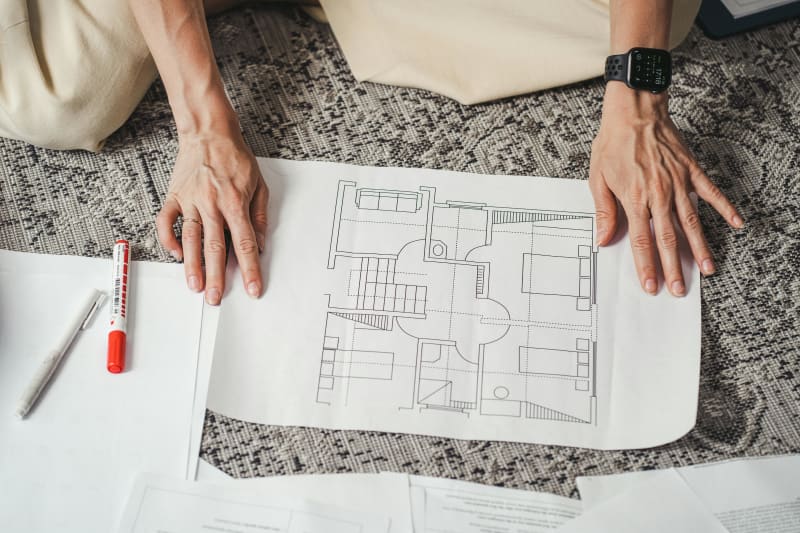
The permit itself is rarely the bottleneck. It's everything around it: the application prep, the plan review queue, the back-and-forth corrections, and the multi-department routing that treats every submission like it's the first one the office has ever seen.
A typical building permit application touches zoning, planning, fire, public works, and the building department itself. Each department reviews sequentially in most jurisdictions, not in parallel. That means a two-week turnaround per department turns into 8-10 weeks minimum before anyone even looks at the actual construction plans.
The staffing crisis makes it worse. Denver's planning department was so understaffed that residential plan review times hit 12-15 weeks in fall 2022. St. Petersburg, Florida commissioned an independent study in 2024 that recommended hiring 20 full-time inspectors and four chief inspectors just to handle the backlog. Honolulu's permit reviewers qualify as "low income" under HUD guidelines, making it nearly impossible for the city to retain experienced staff.
And the numbers keep getting worse. San Diego's average residential permit processing time was 176 days in 2024. San Francisco approved just 7 new homes in the first two months of 2024. Los Angeles housing permits fell 23% year-over-year that same year.
The root causes are predictable:
- Incomplete applications are the top rejection trigger. Missing site plans, engineering calculations, material specs, or contractor license info account for most first-submission failures.
- Building code complexity keeps growing. Regulatory update events increased 28% in 2024 alone (Congruence Market Insights), and codes vary significantly between jurisdictions.
- Paper-based processes still dominate. While San Francisco transitioned to 100% electronic plan review in January 2024, most municipalities haven't caught up.
- Sequential review workflows mean a single department can hold up the entire process for weeks.
How AI Changes the Permit Application Process
AI permit tools don't file your permits for you. They do something more useful: they make sure your application is complete and compliant before it ever reaches the building department.
Application preparation and compliance checking. AI systems cross-reference your project documents against local building codes, zoning requirements, and submission checklists. If your site plan is missing setback measurements, or your structural calculations don't match the code requirements for your jurisdiction, the software flags it before submission. This addresses the 40% first-submission rejection rate directly.
Automated document assembly. Instead of manually filling out each form and attaching each document, AI pulls project details from your plans and auto-populates application fields. PermitFlow's platform, which raised $54 million in Series B funding in December 2025, maintains a database of over 12 million municipal data points across 7,000+ jurisdictions. Their system knows exactly what each jurisdiction requires for each permit type.
Plan review acceleration. CivCheck offers a guided AI plan review platform that checks designs against building codes in real time, so applicants can fix compliance issues before submitting. Honolulu adopted CivCheck and reduced plan review time by 70% on average, according to Clariti Software. Symbium takes a similar approach for specific project types, and 22 California cities have adopted their platform for solar permit processing, cutting per-application review from about an hour to minutes.
The municipal results are hard to ignore. Hamilton, Ontario saw a 60% decrease in permit processing times after implementing AI to scan applications for compliance. New York City's Buildings Tech Lab tested Archistar on residential permits and hit 100% compliance accuracy after 3 feedback cycles, with estimated annual savings of $1.7 million. More than 25 municipalities across the US, Canada, and Australia are now running AI permit review programs, including Austin, Seattle, Houston, and Vancouver (Smart Cities Dive, 2025).
In April 2025, California Governor Newsom launched an AI permitting tool statewide to speed rebuilding after the Los Angeles fires. The software uses computer vision, machine learning, and automated rulesets to check designs against local zoning and building codes instantly. Any California local government can now access it.
Tracking and communication. AI-powered permit management platforms track your application through every department, send alerts when action is needed, and provide a single dashboard view of every permit across every project. No more calling the building department to ask "where's my permit?"
Contractors who want to stop losing weeks to incomplete applications and code compliance issues can try PermitPal, which checks your permit package against local requirements and flags gaps before you submit, for $199.
What Does AI Building Permit Software Cost?
The market breaks into three tiers, and the right one depends on your volume and project complexity.
| Tool | What It Does | Best For | Price Range |
|---|---|---|---|
| PermitPal | AI permit application review and compliance checking | Small to mid-size contractors | $199 |
| PermitFlow | End-to-end permit management with AI agents | Mid-size to enterprise builders | Custom pricing |
| CivCheck | Guided AI plan review and code compliance | Applicants and city reviewers | Custom pricing |
| Symbium | Automated permit verification for solar/ADU | Solar contractors, ADU builders | Custom pricing |
| Permit expediting services | Human-assisted permit management | Complex one-off projects | $200-$1,000/project |
PermitFlow's numbers tell the ROI story clearly: contractors on their platform report 60% shorter timelines, 90% less administrative work, and 5x return on investment. They're used by Lennar, Amazon, and Dick's Sporting Goods for projects across 7,000+ jurisdictions.
For smaller contractors who handle 5-15 permits per month, a focused tool like PermitPal at $199 pays for itself if it prevents a single resubmission cycle. The math is simple: one avoided 4-week delay saves $1,500-$4,000. That's a year of software cost recovered in one project.
The Financial Case for Faster Permits

Permit delays don't just cost time. They cascade through every other part of a construction project.
Direct costs stack up fast. Idle labor runs $200-$500 per week per crew member. Equipment rentals don't pause because the permit is delayed. Material storage adds $150-$400 per month. Subcontractors who get pushed back may charge remobilization fees or simply move on to other jobs, forcing you to find replacements. On a $400,000 residential project, regulatory delays alone can add $32,000-$56,000, or 8-14% of total cost.
Indirect costs are harder to see but often larger. Cash flow gaps from delayed projects ripple through your entire operation. Construction loans accrue interest whether you're building or waiting. And every week you're stuck on a delayed project is a week you can't start the next one. For a small contractor running 3-5 projects simultaneously, a single multi-week delay can bottleneck the entire pipeline.
Clients investing in pre-submission strategy see 30-40% faster approval times, according to CPS Permit Management. Professional permit expediting teams report saving clients 3-4 months on complex commercial projects. AI tools aim to deliver that same speed advantage at a fraction of the cost.
The construction industry is betting heavily on this. The global AI in construction market was valued at $3.93 billion in 2024 and is projected to hit $22.68 billion by 2032, a 24.6% compound annual growth rate (Fortune Business Insights). Pre-construction activities, which include permitting, represent the fastest-growing AI segment in construction at 28.3% CAGR through 2030.
Once your permit clears and the project starts, the invoicing paperwork shouldn't slow you down next. TradesBot generates quotes and invoices from job photos and descriptions for $199, so you can bill as fast as you build.
What AI Can't Fix in the Permit Process
AI handles document preparation and compliance checking well. It doesn't solve every permitting problem.
Understaffed building departments are a human resources problem, not a software problem. When Denver's review times stretched to 12-15 weeks, the issue wasn't application quality. It was that the department didn't have enough people to review applications at any speed. AI can make your submission perfect, but it can't make the reviewer available sooner.
Complex zoning disputes need human negotiation. Variance requests, conditional use permits, and projects that face neighborhood opposition require navigating political and interpersonal dynamics. AI doesn't attend zoning board meetings.
Unique or unusual projects still need experienced professionals. Historic building renovations, projects on environmentally sensitive land, or commercial builds with novel structural systems involve judgment calls that local inspectors make based on experience and context. AI works best for standard residential and commercial projects with well-documented code requirements.
Jurisdictional quirks vary wildly. What passes code review in Austin might fail in Portland. AI tools that maintain large municipal databases (like PermitFlow's 12 million data points) handle this better than general-purpose document tools, but no system covers every small-town building department perfectly.
The right approach: use AI for application completeness, code compliance checking, and permit tracking. Keep experienced humans for zoning negotiations, inspector relationships, and edge-case projects.
How to Speed Up Your Next Building Permit
Construction technology adoption is still low. Only 12% of construction professionals regularly use AI, and 45% of organizations report zero AI implementation, according to a RICS survey of 2,200+ professionals. That means the contractors who adopt early gain a real competitive advantage.
Here's a practical starting point:
- Audit your rejection rate. Pull your last 20 permit applications and count how many required resubmission. If it's more than 3-4 out of 20, your application prep process is costing you money.
- Pick one bottleneck. For most small contractors, it's application completeness. A tool like PermitPal that checks your package against jurisdiction-specific requirements before submission addresses the single biggest cause of delays.
- Digitize your submissions. If your local building department accepts electronic submissions, use them. San Francisco saw measurable improvements after mandating electronic plan review in 2024. Concurrent review by multiple departments, which digital platforms enable, cuts weeks off the sequential paper process.
- Track everything. Don't rely on phone calls to the building department for status updates. Use permit management software that gives you real-time visibility into where each application sits in the review pipeline.
- Measure the ROI. Track your average time from application to approval before and after implementing any new tool. The industry data says contractors using AI permit tools see 30-60% faster approvals. Your numbers may vary by jurisdiction, but even a 20% improvement on a $400,000 project is worth thousands.
The 4.7 million housing unit shortage in the US isn't going away. Municipalities are under pressure to speed up permitting, but most are working with the same staffing levels they had a decade ago. The contractors who figure out how to submit cleaner applications, catch compliance issues early, and automate the administrative overhead will win more projects and finish them faster.
Looking for more ways to cut the admin work slowing down your construction business? Automiva builds AI tools that handle the paperwork so your crew stays on the jobsite.