AI Contract Review: How Small Businesses Draft Contracts Without a Lawyer

Of the 13 million small businesses that faced a significant legal event in a single year, 7 million of them handled it without an attorney. The most common reason? Cost. At $150 to $1,000 per hour, most small business owners treat legal counsel as an emergency expense, not a preventive one.
The problem is that contracts don't wait for your budget. Every freelancer you hire, every vendor you onboard, every client you take on requires some kind of written agreement. Skip it, and you're exposed. Pay a lawyer $500 to review every service agreement, and the bills pile up fast.
AI contract tools are filling that gap. Not by replacing lawyers entirely, but by handling the 80% of contract work that doesn't require one.
What AI Contract Tools Actually Do
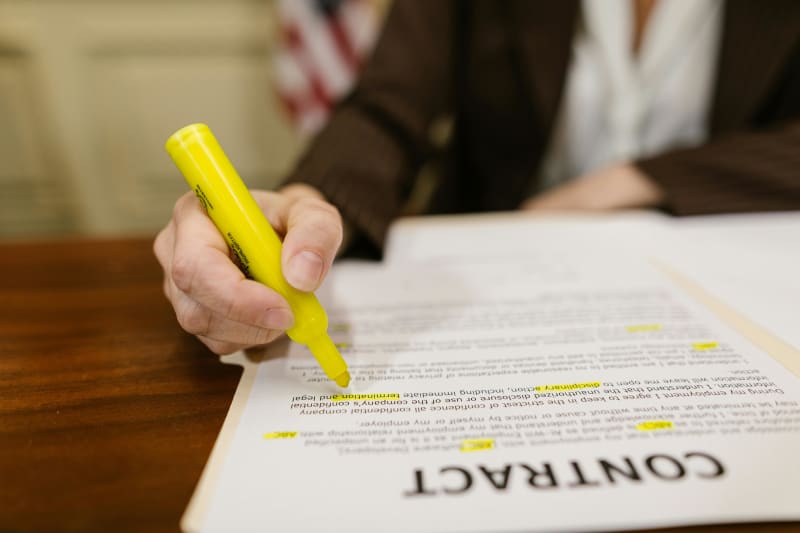
AI contract review software reads your documents and does three things: it flags risks, checks for missing clauses, and generates or edits contract language based on templates and legal best practices.
The mechanics vary by tool, but the general workflow looks like this:
- You upload a contract (or start from a template)
- The AI scans every clause against a database of standard legal language
- It highlights problems: missing liability caps, overly broad indemnification, auto-renewal traps, vague scope definitions
- You get a summary of risks with suggested edits
- For drafting, you describe what you need and the AI generates a first version
A study by Concord found that AI completed contract reviews in 26 seconds. The same review took a human lawyer an average of 92 minutes. The speed advantage is real, but the value isn't just time. It's consistency. AI doesn't skip a clause because it's Friday afternoon.
If your business handles contracts regularly and you're spending hours on review and drafting, ContractCraft automates contract creation and AI-powered review for $199.
Which Contracts Does AI Handle Well?
Not all contracts are created equal, and AI doesn't handle all of them equally either. Here's where AI tools are genuinely reliable versus where they fall short.
AI works well for:
- NDAs and confidentiality agreements - Highly standardized structure. AI can draft, review, and flag deviations from standard terms in seconds.
- Service agreements and MSAs - Recurring vendor and client contracts follow predictable patterns.
- Freelancer and contractor agreements - Scope of work, payment terms, IP ownership. Standard enough for AI to handle.
- Employment contracts - Common clauses, standard templates. AI catches missing non-compete or confidentiality provisions.
- SaaS and subscription agreements - Formulaic language that AI benchmarks against thousands of examples.
AI struggles with:
- M&A agreements - Novel deal structures, negotiation history, strategic nuances that require experienced counsel.
- Jurisdiction-specific enforceability - Non-competes and non-solicits vary dramatically by state. An AI might approve a clause that's unenforceable in California but fine in Texas.
- Regulatory compliance contracts - Healthcare (HIPAA), financial services, securities. Industry-specific rules require specialized legal knowledge.
- One-of-a-kind deals - AI is trained on patterns. No pattern? No reliable output.
The rule of thumb: if the contract is something you've signed a version of before (or would expect to sign again), AI can handle it. If it's a unique deal with significant financial stakes, bring in a lawyer.
What Does AI Catch That You'd Miss?
Contract disputes cost U.S. businesses an estimated $60 billion annually, according to legal industry tracking. Most of those disputes trace back to preventable mistakes made during drafting.
Here's what AI routinely flags that small business owners routinely overlook:
Unlimited liability exposure. Without a limitation of liability clause, you can be held accountable for all direct, indirect, consequential, and even punitive damages. One bad clause in one contract can wrap a company in multi-million dollar litigation.
Overly broad indemnification. Watch for the word "defend" in indemnification clauses. That single word forces you to pay the other party's legal fees from day one of any claim, before anyone determines who's actually liable.
Auto-renewal traps. A 12-month contract that silently auto-renews with a 90-day cancellation window can lock you in for another year if you miss the window by a week.
Missing termination rights. If the contract doesn't specify how and when either party can walk away, you may be stuck in a bad agreement with no clean exit.
Vague scope definitions. "Services as described" without a detailed scope of work is an invitation for scope creep, disputes, and unpaid work.
No dispute resolution clause. Without one, you default to litigation, which is the most expensive and time-consuming way to resolve a disagreement.
How Much Does It Cost? AI Tools vs. Lawyers

The cost difference is substantial, and it's the primary reason AI contract tools are gaining traction with small businesses.
Lawyer Costs (Per Contract)
| Service | Typical Cost |
|---|---|
| Standard contract review | $300-$1,000 |
| Service agreement drafting | $300-$1,000 |
| Partnership agreement | $500-$3,000 |
| Employment agreement | $2,000-$5,000 |
| Monthly retainer | $1,000-$5,000/month |
Source: UpCounsel, Thumbtack 2024-2025
AI Tool Costs (Monthly)
| Tool | Price | Best For |
|---|---|---|
| PandaDoc | Free (limited) to $19/user/month | Proposals + contracts + e-signatures |
| Cobrief | $30/month | Budget-friendly AI contract review |
| DocuSign | $10-$25/month | E-signatures + basic AI insights |
| goHeather | ~$99/month | Jurisdiction-aware review, small firms |
| Signeasy | $20/user/month | Mid-size teams, AI review + e-sign |
For a small business that reviews 5-10 contracts per month, the math is clear. A lawyer at $500 per review costs $2,500-$5,000 monthly. An AI tool at $30-99/month covers the same volume. Even if you still send 20% of contracts to a lawyer for final review on the complex ones, you've cut legal costs by 60-80%.
Need to generate a privacy policy or terms of service while you're at it? Privacy Policy Generator creates compliant legal pages for your website at $99.
How Accurate Is AI Contract Review?
This is the question that matters most, and the answer depends entirely on which tool you use.
Purpose-built legal AI (tools specifically designed for contract analysis) achieves 90-98% accuracy on standard contract types. Concord's platform hit 98% accuracy across thousands of contracts over 11 months of testing. Sirion maintains 94%+ accuracy with error rates below 6%.
Generic AI (using ChatGPT or similar general-purpose models for legal work) is a different story. Stanford research found that large language models hallucinate legal information 69-88% of the time when used casually for legal questions. That means the AI confidently cites legal precedent, statutes, or contract requirements that don't exist.
The takeaway: use a tool built for contracts, not a general chatbot. The accuracy gap between purpose-built and generic AI is the difference between catching a missing liability cap and inventing a legal standard that doesn't apply to your state.
Corporate legal AI adoption doubled from 23% in 2024 to 54% in 2025, according to Summize's January 2026 analysis. And 88% of legal teams using AI reported productivity gains, according to Deloitte's 2024 research. The tools are maturing fast.
When You Still Need a Real Lawyer
AI is a first-pass tool, not a replacement for legal counsel on anything with real stakes. Here's when to pick up the phone.
Any contract with significant financial exposure. If the deal value exceeds $50,000, or if breach could expose you to serious damages, a lawyer's review is a rounding error compared to the potential downside.
Business formation documents. Shareholder agreements, operating agreements, and bylaws require strategic judgment about long-term ownership, succession, and investor protections. AI can draft a starting template, but the decisions behind those documents are human decisions.
Industry-regulated agreements. Healthcare, insurance, financial services, and food/beverage contracts overlap with dense regulatory requirements. An AI might produce a technically valid contract that violates an industry regulation it doesn't know about.
Disputes and negotiations. AI can flag a risky clause, but it can't negotiate, assess relationship dynamics, or advise on acceptable risk tolerance. And if a dispute reaches litigation, AI cannot represent you.
Accountability. Attorneys carry professional liability insurance and bear legal responsibility for their advice. If an AI tool produces a flawed contract, your recourse is limited to the tool's terms of service. If an attorney makes an error, they're professionally and financially accountable.
The best approach for most small businesses: use AI to draft and review standard contracts, and keep a lawyer on retainer (or on speed dial) for the 20% of agreements that carry real risk.
How to Start This Week
If you're currently handling contracts with Google Docs templates and crossed fingers, here's a practical starting point:
- Audit your contract volume. How many contracts do you sign per month? What types? NDAs, service agreements, freelancer terms? This tells you which tool to choose.
- Pick one tool. For under 10 contracts per month, Cobrief ($30/month) or PandaDoc (free tier) handles the basics. For more volume or jurisdiction-specific needs, goHeather at $99/month adds deeper analysis.
- Upload your existing templates. Most tools can analyze your current contracts and flag risks in what you're already using. You may find problems in agreements you've been signing for years.
- Set a rule: AI for standard, lawyer for complex. Route NDAs, service agreements, and freelancer contracts through AI. Send anything involving IP ownership, significant liability, or regulatory overlap to a human attorney.
- Review what AI flags in month one. The patterns it catches across your first 10-20 contracts will tell you exactly where your templates have gaps.
The small businesses pulling ahead on legal costs aren't the ones spending $5,000 a month on retainers. They're the ones using AI to handle the routine 80% and spending their legal budget where it actually matters: the complex 20% that requires a human.
For more on automating professional services workflows, see how firms are automating client intake and how AI handles back-office operations work.
Want to see what else you can automate? Automiva builds AI tools that help small businesses work faster and cut overhead.