AI for Dental Clinics: Appointment Reminders, Patient Recall, and Review Collection

A dental practice in the U.S. misses about 32% of incoming phone calls. That's not a typo. Nearly a third of all calls to dental offices go unanswered, costing the average practice between $100,000 and $150,000 per year in lost revenue. And 75% of those patients never call back.
The front desk is the bottleneck. Your team is checking in patients, verifying insurance, answering questions in person, and trying to handle a ringing phone simultaneously. Something has to give, and what gives is usually the phone, the recall list, and the review requests that never get sent.
AI tools for dental clinics are solving these three problems specifically: appointment reminders that reduce no-shows, patient recall that reactivates lapsed patients, and automated review collection that builds your online reputation without adding to your staff's workload.
What AI Dental Tools Actually Do (And Don't Do)
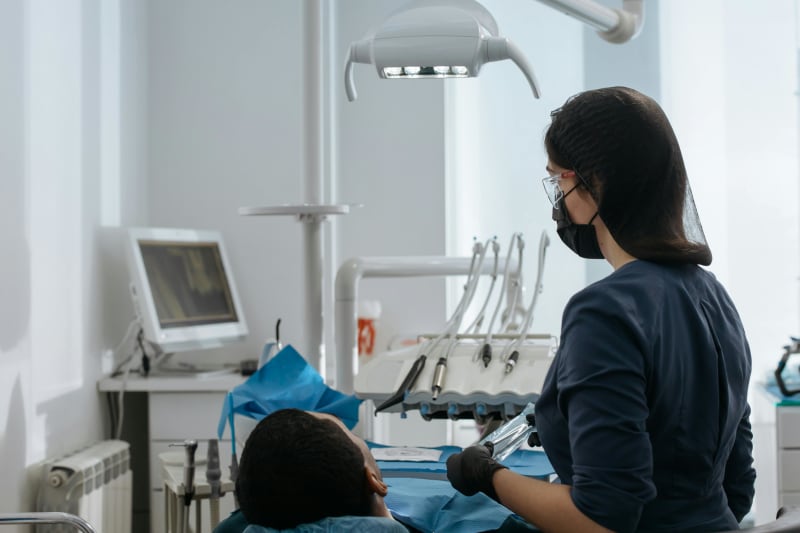
AI for dental clinics isn't about diagnostic imaging or treatment planning. That's a different category entirely. The AI tools covered here handle the operational side: patient communication, scheduling, and reputation management.
Automated appointment reminders send texts, emails, and voice messages at preset intervals before each appointment. The best systems use a three-touchpoint strategy (one week before, one day before, same-day) that delivers a 156% improvement in confirmation rates. SMS is the backbone because text messages have a 98% open rate compared to 21% for email.
Patient recall systems identify patients who haven't visited in 6, 12, or 18+ months and automatically run multi-channel outreach campaigns. Text first, then email, then phone call. The system tracks who responds, who books, and who needs a different approach.
Review collection automation sends review requests via text after completed appointments, directs patients to Google (where 81% of all reviews are posted, according to Birdeye's 2025 data), and uses AI to draft responses to reviews.
AI receptionists answer phone calls after hours, book appointments directly into your practice management system, and handle common questions like "Do you accept my insurance?" and "What are your hours?" Some platforms report missed calls dropping by 80% after implementation.
What these tools don't do: they don't replace clinical judgment, they don't handle complex treatment coordination, and they don't work well when your patient data is messy or incomplete.
How Much Do Dental No-Shows Actually Cost?
The numbers are worse than most practice owners realize. The Medical Group Management Association puts the average dental missed-appointment rate between 18% and 22%, which translates to $138,000 in lost revenue per practice per year.
That's the average. A single daily no-show can cost $5,000 to $50,000 annually per provider, depending on the value of the appointment. A crown prep that no-shows represents $1,200 in lost production. A hygiene appointment, $200-$350. Multiply that across a five-day week and a full year, and the math gets painful fast.
The root cause in 36% of cases? Forgetfulness. Not dissatisfaction, not cost concerns. Patients simply forgot. That's the problem automated reminders solve directly.
A Sesame Communications study tracked 1,604,184 appointments across 64 dental practices over five years. After implementing automated reminders, no-shows dropped by 22.95%. Practices that previously had no reminder system saw a 19.58% reduction. Practices switching from another system to Sesame's platform saw a 21.31% improvement. The financial result: $31,457 in incremental production per practice from schedule compliance alone.
Other studies put the reduction higher. Automated systems consistently deliver 30-40% decreases in missed appointments, with some practices reporting up to 50% reductions when combining automated reminders with same-day confirmation calls.
Tired of review requests falling through the cracks? ReviewReply automates review collection and AI-powered response drafting for $99, so every patient gets a follow-up and every review gets a reply.
What AI Dental Platforms Cost
Here's the real pricing, not the "contact us for a quote" runaround.
| Platform | Starting Price | Best For |
|---|---|---|
| Birdeye | ~$99-$349/month | Review collection and reputation management |
| Weave | ~$250/month (Pro) | All-in-one: phone, text, reminders, reviews |
| NexHealth | Custom pricing | Patient engagement with PMS integration |
| RevenueWell | Custom pricing | Marketing automation and recall for 7,500+ practices |
| Doctible | ~$199/month | Reminders, reviews, and online booking |
| Arini | Custom pricing | AI phone receptionist for dental offices |
| Dentina.ai | Custom pricing | AI receptionist with direct PMS integration |
Weave's Pro plan starts around $250/month but locks AI features (call intelligence, practice analytics) behind the Elite and Ultimate tiers. NexHealth and RevenueWell require custom quotes but integrate directly with major practice management systems like Dentrix, Eaglesoft, and Open Dental.
For a single-location practice, budget $150-$350/month for a platform that covers reminders, recall, and basic review management. The ROI math is straightforward: preventing five no-shows per month at $200 each saves $1,000 in production. Most platforms pay for themselves in the first month.
What Happens When You Reactivate Lapsed Patients
Most dental practices lose 20-30% of their patient base every year. Not because patients leave for another dentist. Because nobody follows up.
The average practice has between $500,000 and $1.5 million worth of inactive patients sitting in their database. These are people who completed treatment, had a good experience, and then stopped scheduling. No recall postcard. No text. No reminder. They just fell off.
AI recall systems change this by running automated multi-channel campaigns. The typical sequence: a friendly text message, then an email one week later, then a phone call the following week. Each touchpoint is customized based on how long the patient has been inactive and what treatment they had.
The benchmarks for reactivation rates:
- Patients lapsed 12 months: 15-25% reactivation rate
- Patients lapsed 18 months: 8-15% reactivation rate
- Overall inactive list: ~10% average conversion
Hylan Dental Care ran a reactivation campaign and generated $127,301 in 90 days. That's not a projection. That's tracked production from patients who came back through automated outreach.
RevenueWell users see an average annual revenue increase of $73,000. Much of that comes from filling chairs that would otherwise sit empty, by reaching patients who want to come back but need a prompt.
Sending review requests manually after every appointment? ReviewReply automates the entire process for $99, from post-visit texts to AI-drafted responses to every Google review your practice receives.
Why Google Reviews Are Your Best Marketing Channel
87% of patients read online reviews before choosing a dentist. That statistic alone should change how dental practices allocate their marketing budgets.
The data from practices using automated review collection:
- Review volume increases 30-50% compared to manual follow-up
- Response rates jump from 5-10% (manual) to 25-35% (automated text requests)
- Practices with 4.7+ star ratings receive significantly more new patient calls
- Practices with 300-500 reviews see call volume double or triple compared to those with fewer than 100
Google's local search algorithm weights three review factors: quantity, recency, and average rating. Practices ranking in the top 3 Google Map results average 78 reviews with 4.4+ star ratings. Practices in positions 4-10 average just 31 reviews. That gap determines who gets seen and who doesn't.
The most overlooked finding: 1 in 2 patients have avoided a provider specifically because of poor or unanswered reviews (Birdeye, 2025). Not just low ratings. Unanswered reviews. Responding to every review, positive or negative, signals that the practice pays attention. AI response tools make this realistic for busy practices by drafting replies that the office manager can approve and post in seconds.
A dental practice should aim for 3+ new reviews per week to stay competitive. Without automation, that requires your front desk to remember to ask every patient, every time. With automation, it happens by default.
Where AI Falls Short for Dental Practices
Only 35% of dental practices had implemented AI by early 2024, according to industry surveys. Adoption is growing, but slowly. There are real reasons for that.
HIPAA compliance adds complexity. Every AI tool touching patient data must be HIPAA-compliant with proper Business Associate Agreements. Not all platforms meet this standard, and practices are liable for choosing non-compliant vendors.
Practice management system integration varies. NexHealth and Weave integrate with Dentrix, Eaglesoft, and Open Dental. Others require workarounds. If your PMS doesn't connect, the automation breaks down and your team ends up doing double entry.
Only 26% of practices offer online booking. According to NexHealth's State of Dental report, most practices still require phone calls to schedule. AI reminders work best when patients can confirm, cancel, or reschedule with a single tap. If your system forces them to call back, you lose much of the benefit.
AI-generated review responses need human oversight. An AI can draft a professional reply to a negative review, but a response that mischaracterizes the clinical situation or violates HIPAA creates risk. Every response needs a quick human review before posting.
The right approach: start with one problem (usually no-shows), prove the ROI, then expand to recall and reviews. Trying to implement everything at once overwhelms staff and increases the chance of a bad experience.
How to Start with AI for Your Dental Practice
- Audit your no-show rate. Pull the last 90 days from your PMS. If your no-show rate is above 10%, automated reminders will have immediate ROI. Above 15%, it's costing you tens of thousands annually.
- Pick a platform that integrates with your PMS. Integration is non-negotiable. If the AI can't read your schedule and write back to it, you're adding work instead of removing it. Check compatibility with Dentrix, Eaglesoft, Open Dental, or whatever you run.
- Set up automated reminders first. Start with a three-touchpoint system: 7 days out, 1 day out, and morning of. Use SMS as the primary channel. This alone reduces no-shows 20-40%.
- Launch automated review requests. Send a text within 2 hours of checkout while the experience is fresh. Direct to Google first, since that's where 81% of reviews are posted and where local SEO impact is highest.
- Run a recall campaign on 12-month lapsed patients. Pull the list, segment by last treatment, and run a 3-week automated outreach sequence. Expect 15-25% to rebook. That's revenue sitting in your database right now.
Dental practices using AI receptionists report saving 10-15 hours per week of front desk time. Practices running automated recall see $73,000+ in additional annual revenue. And every percentage point reduction in your no-show rate goes straight to your bottom line.
Looking for AI tools that go beyond reminders to automate the admin work slowing your practice down? Automiva builds AI solutions for dental clinics and small businesses that handle the repetitive tasks so your team can focus on patients.