AI for Gyms and Fitness Studios: Member Retention, Class Scheduling, and Reactivation

Nearly half of all new gym members quit within six months. Not because they hate the gym. Because they fell off, got busy, and nobody noticed until they'd already made up their mind to cancel.
The typical gym with 1,000 members loses roughly 286 of them every year, according to the Health and Fitness Association's benchmark of 71.4% annual retention. At $60-$120 to acquire each replacement member, that's $17,000-$34,000 just to stay flat. And that's before you count the lost membership revenue itself.
AI tools for gyms and fitness studios are tackling three specific problems: predicting which members are about to leave (so you can intervene), automating class scheduling to match actual demand, and running reactivation campaigns that bring former members back. Here's what the technology actually does, what it costs, and whether the ROI holds up.
How AI Predicts Gym Member Churn Before It Happens
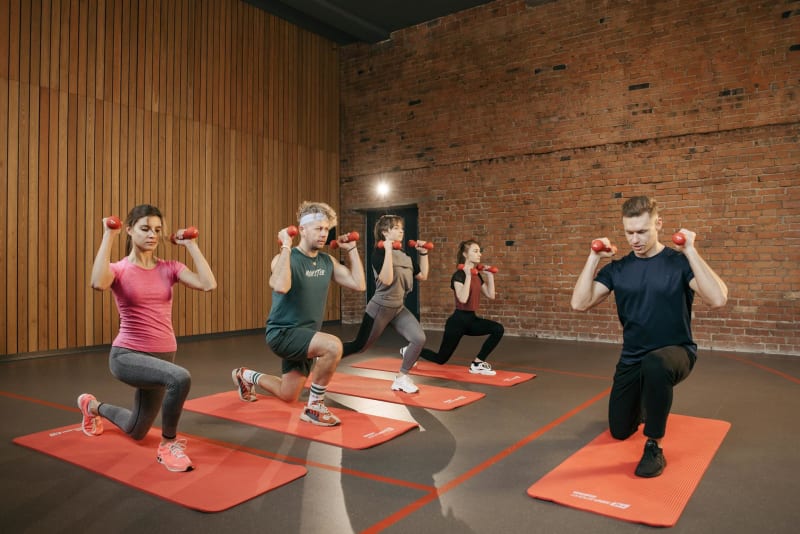
The old approach to retention was reactive. A member cancels, front desk offers a discount, member leaves anyway. By that point, the decision was made weeks ago.
AI retention tools flip this by monitoring behavioral patterns and flagging members before they cancel. Here's the practical version of how it works:
Keepme Score uses a Random Forest algorithm with over a million decision trees to analyze attendance patterns, booking behavior, and engagement data. The company claims 95% accuracy in predicting which members will cancel within six months. That's an aggressive claim, but the underlying approach is sound: a member who visits three times per week and drops to once is a different risk profile than someone who has always been a once-a-week visitor.
Peak Automation Group tracks 47 behavioral signals across integrations with Mindbody, Glofox, and 15+ gym management systems. Their pitch is that most gyms only monitor check-in frequency, while PAG watches class bookings, app engagement, payment behavior, and other leading indicators.
The concrete result from one multi-site operator using Keepme: member dormancy dropped by roughly 25% within 60 days of setup, translating to 500-600 more active members per month across their clubs. A single Crunch Fitness location using AI retention saw its 12-month retention rate improve by 17%, preserving approximately $263,000 in annual revenue.
What triggers the intervention matters as much as the prediction. The better systems don't just flag at-risk members. They automatically send a personalized check-in text, offer a free personal training session, or alert a staff member to make a phone call. The human touch still matters, but AI decides when and who.
If your gym collects reviews but struggles to respond to them consistently, ReviewReply automates review responses across Google and other platforms for $99. For gyms, positive reviews directly drive new member sign-ups. 87% of prospects check reviews before choosing a gym.
What AI Retention Platforms Cost
Pricing varies widely depending on whether you want a full management suite or a focused retention add-on.
| Platform | Starting Price | What It Does |
|---|---|---|
| Virtuagym | $29/month | Full gym management with AI retention planner |
| Mindbody | $99/month per location | Scheduling, marketing, AI chatbot, marketplace |
| AgentZap | $139/month | 24/7 AI receptionist for bookings and inquiries |
| Pike13 | $129/month | Mobile-first scheduling and membership management |
| Keepme | Custom pricing | Predictive retention scoring and AI sales agent |
| Peak Automation Group | Custom pricing | 47-signal behavioral tracking and interventions |
For a mid-sized gym with 500-2,000 members, expect to spend roughly $1.70 per member per month on AI retention technology. Premium predictive analytics push that to $2.50-$4.00 per member per month.
The math works if your churn rate is above 25%. A gym paying $139/month for an AI receptionist that captures after-hours calls (which account for roughly 40% of missed calls at most gyms) needs to convert just 3 extra prospects per month at $50/month membership to break even. One gym using Automatdo's AI call system went from missing 40% of after-hours calls to capturing every one, booking 47 tours in a single month.
How AI Changes Class Scheduling
Most gym owners set class schedules based on instructor availability and gut feel. AI scheduling tools bring data into that process.
Here's what they actually do:
- Analyze attendance patterns across every class, time slot, and instructor to identify which sessions are overbooked and which are consistently underperforming
- Predict demand for specific class types based on seasonal trends, member preferences, and historical data
- Manage waitlists dynamically by estimating the probability of spots opening based on cancellation patterns for that specific class
- Recommend schedule changes like adding a second evening yoga session when the 6 PM slot fills within hours of opening, or dropping the Tuesday 2 PM spin class that averages 4 attendees
The operational impact is real. Members who participate in group classes are 56% less likely to cancel their membership. That makes class optimization a retention tool, not just a scheduling convenience. An empty class costs instructor wages with no revenue. A waitlisted class that could have been doubled represents lost member satisfaction and potential cancellations from people who couldn't get in.
Platforms like Mindbody (used by 60,000+ businesses in 130+ countries) and ABC Glofox handle scheduling as part of their broader suite. Mindbody's AI chatbot also handles 24/7 booking through their consumer marketplace, which has 2.4 million active users looking for classes near them.
Fitness studios dealing with lead qualification can use LeadLens to score and prioritize incoming prospects automatically for $249, so your sales team focuses on people most likely to sign up rather than chasing every inquiry equally.
Reactivation Campaigns: Getting Former Members Back

Here's a number most gym owners overlook: the probability of selling to a former member is 60-70%, compared to 5-20% for a brand new prospect. Your lapsed member list is the cheapest growth channel you have.
AI makes reactivation campaigns scalable. Instead of a staff member manually pulling a list of cancelled members and sending the same email to everyone, AI segments former members by cancellation reason, time lapsed, and lifetime value, then runs multi-channel sequences timed to convert.
A practical reactivation sequence looks like this:
- Day 3 post-cancellation: Personalized SMS with a time-limited offer (SMS open rates hit 98%, compared to 21% for email)
- Day 7: Retargeted social media ad featuring a testimonial or new class
- Day 10: Personal phone call from a manager for high-value former members
- Day 14: Final email with a last-chance call to action
Timing matters. The optimal window is 3-6 months post-cancellation. After 12 months, response rates drop significantly. Seasonal windows like January (New Year's resolutions) and pre-summer are the highest-converting periods for win-back campaigns.
What to watch out for: excessive discounting trains members to cancel and wait for offers. A better approach is value-based reactivation: a free personal training session, a new class they haven't tried, or a membership freeze option they didn't know existed. Long-term price reductions undermine your revenue model.
SMS benchmarks for gym win-back campaigns: 10-30% reply/click rate and 5-15% conversion back to active membership.
Where Response Speed Creates (or Kills) Growth
A Keepme study of Australian fitness businesses in 2024 tested how quickly gyms responded to inquiries. The results were bad:
- 18% of emails went completely unanswered
- 26% of Instagram DMs went unanswered
- 33% of Facebook messages went unanswered
- Average email response: 7.5 hours
- Average Instagram response: 31 hours
Every unanswered message is a prospect who went to the gym down the road. AI receptionists and chatbots solve this at a fraction of the cost of additional staff. AgentZap runs at $139/month and integrates with Mindbody, Glofox, PushPress, Vagaro, and 10+ other platforms. Compare that to a full-time receptionist at $3,500-$4,200/month.
This doesn't mean replacing your front desk staff. It means covering the gaps: after-hours calls, simultaneous inquiries during peak hours, and the Instagram DMs that nobody remembers to check.
What to Look for When Choosing AI Gym Tools
Not every AI tool is worth the subscription. Here's what separates the useful ones from the overpriced:
Integration with your existing system is non-negotiable. If the tool doesn't connect to your current gym management software (Mindbody, Glofox, Zen Planner, PushPress), you'll spend more time on manual data entry than you save. Peak Automation Group integrates with 15+ platforms. Keepme integrates with most major systems. Check before you buy.
Actionable outputs, not just dashboards. A churn prediction score is useless if it just sits in a report. The tool should trigger automated actions: send a text, alert a staff member, schedule a follow-up call. Ask specifically what happens after a member is flagged.
Transparent pricing. "Custom pricing" often means expensive. If a vendor won't give you a ballpark without a 45-minute demo call, budget for enterprise-level costs. Virtuagym at $29/month and AgentZap at $139/month are transparent. Keepme and PAG are not.
ROI tracking built in. You need to know how many members were flagged, how many were contacted, how many stayed. Without this, you're guessing whether the tool works. PAG claims a typical 10x ROI within 90 days, but verify those claims against your own numbers.
Want to see what else you can automate beyond member retention? Automiva builds AI tools for small businesses across dozens of industries, including fitness and gym operations.
The Bottom Line on AI for Gyms
The fitness industry hit $102.2 billion globally in 2025, with U.S. gym memberships growing 6% year over year. The market is growing, but so is competition. The gyms that retain members efficiently will outperform the ones spending everything on acquisition.
AI for gyms isn't about replacing trainers or automating the personal touch. It's about catching the signals that humans miss: the member whose attendance dropped from three times a week to once, the after-hours caller who never got a callback, the former member who would have returned with the right message at the right time.
A 5% improvement in retention can boost profits by 25-95%, according to research cited by the Health and Fitness Association and Harvard Business Review. That's not a hypothetical. For a gym with 1,000 members paying $50/month, a 5% retention improvement means 50 fewer cancellations per year, or $30,000 in preserved annual revenue.
Start with one tool that addresses your biggest leak. If you're losing members to churn, try a predictive retention platform. If you're missing calls and messages, add an AI receptionist. If your lapsed member list is collecting dust, run an automated reactivation campaign.
The technology is ready. The question is whether you'll use it before your competitors do.