AI for Medical Clinics: Patient Intake, Appointment Reminders, and Follow-up Care

Hospital administrative spending in the U.S. hit $687 billion in 2023. Direct patient care? $346 billion. That's a nearly 2:1 ratio, and it's gotten worse every year since 2011 (Trilliant Health, 2024). Physicians spend almost twice as much time on paperwork as they do with patients.
For independent medical clinics, this plays out in three specific bottlenecks: patient intake that still runs on clipboards and fax machines, appointment no-shows that drain $150,000 a year from the average practice, and post-visit follow-up that nobody has time to do properly. AI tools now address all three, and the pricing has dropped enough that a solo practitioner can afford them.
What Patient Intake Actually Looks Like Without AI
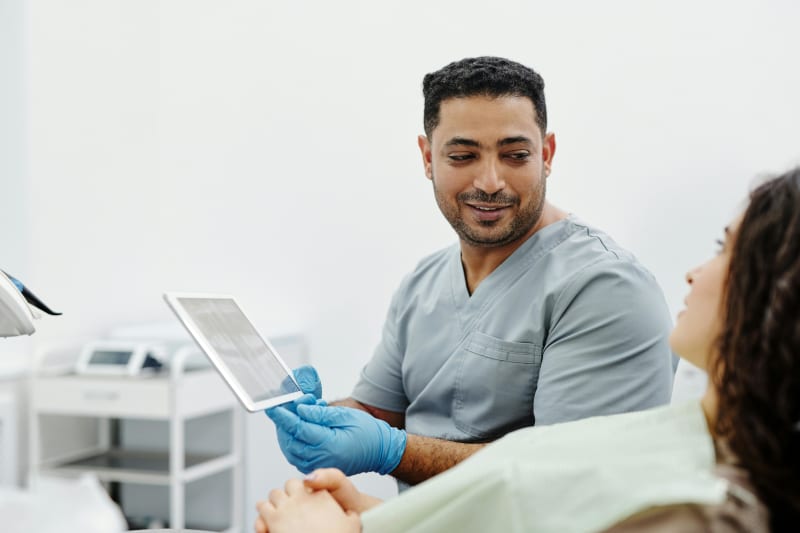
Walk into most independent medical clinics and the intake process hasn't changed in 20 years. New patients fill out paper forms in the waiting room. Staff manually enter that information into the EHR. Insurance verification happens over the phone or through a portal that requires someone to sit and type. One data entry error on an insurance ID cascades into a denied claim that takes weeks to resolve.
The numbers tell the story. Physicians lose 18.5 million hours annually to unnecessary administrative tasks (AMA, 2024). Administrative overhead eats up to 30% of total U.S. healthcare spending (Health Affairs). And 62% of medical practice operators cite inventory and intake inaccuracy as a top operational challenge (NRA, 2024).
AI intake platforms attack this differently than basic digital forms. They run logic-driven patient interviews that adapt questions based on previous answers. A patient reporting knee pain gets routed to orthopedic-specific intake questions, not a generic health history form. Insurance information gets verified automatically against payer databases before the patient walks in the door.
Health Note, which provides AI-assisted intake and note generation, documented results at an orthopedic clinic with 55 physicians: 35,119 visits processed, 3 to 4 minutes saved per visit, a 97% form completion rate, and clinicians reclaiming 3 to 7 hours per week (Health Note, 2025).
That time savings compounds. Four minutes per visit across 25 patients a day is over 100 minutes. For a two-provider clinic, that's 3+ hours daily that can go back to seeing patients.
How Much AI Intake and Communication Tools Cost
Let's get specific. Most articles in this space dodge pricing, which doesn't help anyone making a decision.
| Platform | What It Does | Monthly Cost | Best For |
|---|---|---|---|
| IntakeQ | Digital intake forms, e-signatures, SOAP notes, reminders | $49.90 (forms only) to $79.90 (full practice management) | Budget-conscious independents |
| Weave | VoIP, reminders, 2-way texting, AI call intelligence, review requests | From $250 + $750 setup | Small-to-mid practices wanting all-in-one |
| Solutionreach | Reminders, patient messaging, recall campaigns, reputation management | $329 to $400+ starting | Mid-size practices, dental and medical |
| Phreesia | Enterprise intake, insurance verification, clinical screenings, revenue cycle | Custom (enterprise) | Large organizations, 50+ providers |
| Luma Health | AI scheduling, reminders, digital intake, waitlist management, chatbots | Custom (enterprise) | Health systems, multi-site operations |
| Klara | Multi-channel messaging, intake, telehealth, AI-powered routing | Custom | Multi-specialty outpatient practices |
Two things stand out. First, the entry point is surprisingly low. IntakeQ at $49.90/month with HIPAA compliance and a Business Associate Agreement is accessible for a solo practitioner. Second, the gap between entry-level and enterprise is massive. A 5-provider clinic doesn't need Phreesia, and paying for it would be a waste.
Spending hours on manual client intake every week? IntakeIQ automates intake and lead qualification for professional services at $249, so your staff can focus on patients instead of paperwork.
The No-Show Problem Nobody Solves Manually
No-show rates in U.S. healthcare range from 5.5% to 50% depending on the specialty, with a global average of 23.5%. Primary care sits around 5% to 20%. Some outpatient clinics hit 50%.
The cost is staggering. The U.S. healthcare system loses an estimated $150 billion per year to missed appointments (Curogram, 2024). The average independent practice? Roughly $150,000 annually. A study of 67,000 patient no-shows calculated $7 million in losses for a single organization. And 47% of practices report no-shows cost them up to $2,500 every month (MGMA, 2025).
But the hidden cost is worse: patients who miss a single primary care appointment are 70% more likely not to return within 18 months. No-shows don't just cost you that visit. They cost you the patient.
Automated reminders consistently reduce no-shows by 20% to 39%. An NIH study from 2025 found that patients are 23% more likely to attend when reminded via automated systems. Multi-channel approaches (SMS + email + voice) push that reduction to 60%.

AI goes further than basic reminders. Predictive systems analyze patterns to identify which patients are likely to no-show before it happens, then allocate extra outreach to those patients or double-book intelligently. A 2025 study found that clinics using predictive chatbots saw a 50.7% reduction in missed appointments and a 5.7-minute decrease in patient waiting time (John Snow Labs, 2025).
What Real Clinics Actually Saved
The case studies are what make this real. Here are named organizations with documented results.
TriState Health deployed Luma Health and saw a 40% reduction in no-shows, a $760,000 annual revenue gain, and 3 full-time employees repurposed to higher-value work.
Mile Bluff Medical Center cut no-shows by 20% in seven months, saved 350+ staff hours per month, and recovered 2,000+ patient wait days in the first three months.
Houston ENT & Allergy generated $1.2 million in additional revenue through Luma Health's Smart Waitlist feature alone, filling cancellation slots that would have gone empty.
UAMS (University of Arkansas for Medical Sciences) captured $138 million in appointment revenue in one year using Luma Health, saving 98 staff hours in the first month with their Navigator AI.
The NHS Mid and South Essex Trust piloted Deep Medical's AI system and saw a 30% fall in non-attendances over six months. The result: 377 missed appointments prevented, 1,910 additional patients seen, and an estimated £27.5 million per year in potential savings. The system predicted no-shows with 90% accuracy two weeks in advance. NHS England is now rolling it out to 10 additional Trusts (NHS England, 2024).
The ROI math for smaller practices is simpler. A medical receptionist costs $50,000+ per year in salary, benefits, and turnover. A reminder and intake platform runs $250 to $400/month ($3,000 to $4,800/year). Even if the software only prevents 30% of no-shows on a practice losing $150,000 annually, that's $45,000 recovered for under $5,000 invested.
Already dealing with patient no-shows and scheduling bottlenecks? See how AI tools for medical clinics are solving these problems across intake, reminders, and follow-up.
AI Follow-up Care: The Post-Visit Gap
Most clinics handle follow-up manually, which means it often doesn't happen. Post-visit instructions go home on a printed sheet. Medication reminders depend on the patient remembering. Chronic care check-ins happen when the patient calls back (or more likely, doesn't).
This gap has real consequences. 30-day hospital readmission rates remain stubbornly high for chronic conditions. UPMC found that adding remote patient monitoring for high-risk patients lowered their 30-day readmission rate by 76% (IntuitionLabs, 2025). A survey of 25 RPM organizations showed hospital admissions for chronic complications dropped 19% to 41% after implementing monitoring programs.

Universal Health Services launched Hippocratic AI's generative AI agents in June 2025 to conduct post-discharge follow-up phone calls. The system handles care transition conversations, medication adherence checks, and escalation to human staff when needed. Hippocratic AI raised $141 million at a $1.64 billion valuation, specifically for non-diagnostic, patient-facing clinical tasks.
For independent clinics, the practical applications are more modest but still valuable:
- Automated post-visit summaries sent via text within hours of the appointment, with clear next steps and medication reminders.
- Satisfaction surveys routed 2 hours after the visit. Happy patients get prompted to leave a Google review. Unhappy patients get flagged for a manager callback before the complaint goes public. Tools like ReviewReply ($99) automate review responses across platforms so no feedback goes unanswered.
- Chronic care check-ins via automated SMS that ask patients to report symptoms or vitals on a schedule, with alerts to clinical staff when values fall outside normal ranges.
- Recall campaigns that automatically re-engage patients due for follow-ups, screenings, or annual visits who haven't booked.
The conversational AI market in healthcare hit $13.53 billion in 2024 and is projected to reach $48.87 billion by 2030 (PatientNotes.ai). Patient engagement specifically grew 20x year-over-year in 2025 AI spending. The tools exist. The question is whether your practice uses them or leaves money and patient outcomes on the table.
What AI Can't Handle in a Medical Clinic
Being honest about the limits matters, especially in healthcare where the stakes are higher than a missed restaurant reservation.
Clinical decision-making. AI intake tools collect and organize patient information. They don't diagnose. They don't recommend treatment. And they shouldn't. ECRI named "insufficient governance of AI" as the #2 patient safety threat for 2025, specifically because AI models trained on flawed data can increase adverse event risk.
Sensitive patient conversations. A patient disclosing mental health concerns, abuse, or a terminal diagnosis needs a human, not an automated follow-up sequence. AI can flag these situations and route them appropriately, but the conversation itself requires empathy that software can't replicate.
Bias in patient populations. Research shows AI systems perform 20% worse on average when applied to different patient populations than those in their training data (Nature Medicine, MIT). A tool trained primarily on data from suburban practices may not work as well for an FQHC serving a different demographic. Ask vendors about training data diversity before signing.
Complex insurance situations. AI can verify standard insurance eligibility quickly. But prior authorizations for complex procedures, appeals on denied claims, and out-of-network negotiations still need humans who understand the payer system.
The clinics getting the best results use AI for the high-volume, repetitive work (intake forms, appointment reminders, basic follow-up messages) and keep humans on the interactions that require clinical judgment or emotional intelligence.
How to Start Without Disrupting Your Practice
If you run a clinic with 2 to 10 providers, here's a practical path that doesn't require ripping out existing systems.
Week 1: Measure the problem. Pull your no-show rate for the last 90 days from your scheduling system. Check how many calls went unanswered during business hours. Calculate what those missed appointments cost using your average reimbursement per visit.
Week 2: Start with reminders. If you're not sending automated appointment reminders, this is the single highest-ROI move. Weave ($250/month) or IntakeQ ($49.90/month) both handle this. Configure SMS confirmations at booking, 48 hours before, and 2 hours before the appointment.
Week 3: Digitize intake. Move one new-patient form to digital. IntakeQ and Phreesia both support HIPAA-compliant digital forms with e-signatures. Measure staff time saved per patient visit for 30 days.
Week 4: Add follow-up automation. Set up post-visit text messages with care instructions and a satisfaction survey. Route negative feedback to your office manager. Route positive feedback to a Google review prompt.
66% of physicians used some form of AI in 2024, up from 38% in 2023 (AMA Survey). 43% of medical groups added or expanded AI tools in 2024, more than double the 21% from the year before (MGMA, 2024). AI is now the #1 technology priority for medical practices in 2025, displacing EHR usability for the first time (MGMA, 2025). The practices that adopt these tools now will have a permanent operational advantage over those that wait.
Looking for more ways to automate your clinic's operations? Automiva builds AI tools for healthcare practices and small businesses that handle the administrative work eating into your time with patients.