AI for Nonprofits: Automate Donor Management and Fundraising Outreach

For every $100 a nonprofit raises from new donors, it loses $96 to donor attrition. The Fundraising Effectiveness Project's Q4 2024 data puts the average donor retention rate at 42.9%, with first-time donors retained at just 13.8%. For most organizations, the fundraising treadmill never stops.
AI tools built for nonprofits are starting to change that math. Not by replacing development staff, but by giving understaffed teams the data and automation to stop losing donors they already have.
What AI Actually Does for Nonprofit Organizations

AI for nonprofits covers three core functions: donor management, fundraising optimization, and grant writing. The tools vary, but the value proposition is consistent across all of them. Let the software handle pattern recognition and repetitive outreach so your team can focus on relationship building.
Donor management AI scores every constituent in your database based on engagement history, giving patterns, and wealth indicators. Instead of manually sorting through spreadsheets to figure out who's likely to give again, the software flags at-risk donors 60-90 days before they lapse and surfaces major gift prospects you'd otherwise miss.
Fundraising AI personalizes donation amounts, optimizes email timing, and runs automated outreach sequences triggered by donor behavior. When a first-time donor gives $50, the system calculates whether to suggest $55 or $75 on the next ask based on data from thousands of similar donors.
Grant writing AI generates first drafts of proposals by pulling from your organizational data, previous submissions, and funder requirements. A proposal that typically takes 30-50 hours to write manually gets an 80% complete first draft in minutes.
The adoption numbers are telling. 82% of nonprofits are now using AI tools, up from 67% in 2024, according to the Blackbaud Institute's 2025 Status of Fundraising report. But the Virtuous/Fundraising.AI 2026 report surveyed 346 nonprofits and found a significant gap: while 92% use AI in some capacity, only 7% report major improvements in organizational capability. Most are using it individually, without shared workflows or strategy.
The difference between the 7% seeing real gains and everyone else isn't the technology. It's how it's deployed.
How Much Does AI Donor Management Cost?
The pricing ranges from free to several hundred per month, depending on your contact volume and the features you need.
AI-Powered Nonprofit CRM Tools
| Tool | Starting Price | Key AI Features |
|---|---|---|
| Little Green Light | $39/month (2,500 contacts) | Basic donor management, reporting |
| DonorPerfect | $99/month | Workflow automation, Constant Contact sync |
| Neon CRM | $99-$399/month | Marketing automation, revenue dashboards |
| Bloomerang | $125/month (1,000 contacts) | AI retention predictions, engagement scoring, AI content assistant |
| Keela | $134/month (1,000 contacts) | Smart Ask (AI donation amounts), predictive donor scoring |
| Salesforce Nonprofit Cloud | $60/user/month | Einstein AI, integrates with DonorSearch and WealthEngine |
AI Donation Platforms
| Tool | Pricing Model | Key AI Features |
|---|---|---|
| Givebutter | Free with donor tips; 1-5% without | Peer-to-peer fundraising, text-to-donate |
| Fundraise Up | 4% per transaction, no monthly fee | AI-suggested amounts, recurring upgrade prompts, adaptive fee coverage |
For context: acquiring a new donor costs $1.50 per dollar raised, while retaining one costs $0.20 per dollar raised, according to DonorSearch's 2024 analysis. That's over 7x more expensive. A $125/month CRM that prevents even a handful of donors from lapsing pays for itself within the first quarter.
If your nonprofit handles donor communications, grant applications, and fundraising campaigns with a small team, NonprofitAI automates donor management and grant writing for $199.
The Donor Retention Problem AI Solves
The Fundraising Effectiveness Project, a collaboration between AFP and GivingTuesday that tracks 25,000+ nonprofits, reported these figures for 2024:
- Overall donor retention: 42.9% (down 2.6% year-over-year, the fourth consecutive year of decline)
- First-time donor retention: 13.8%
- Repeat retained donor retention: 69.2%
- Recurring donor retention: 78-83%
That last number is the one to focus on. Once a donor gives a second gift, retention nearly doubles. Once they become recurring monthly givers, retention jumps to 78-83% with an average annual contribution of $950, according to Neon One's 2024 Recurring Giving Report. Recurring donors have 5.4x the lifetime value of single-gift donors.
AI tools attack this problem from two directions.
Predictive lapse detection. Bloomerang's AI predicts which donors are at risk of lapsing 60-90 days before it happens, based on engagement signals: email opens declining, event attendance dropping, giving frequency slowing. The system triggers automated re-engagement sequences before the donor goes cold. Bloomerang reports that their clients see first-time donor retention rates 28.5 points higher than industry averages.
Intelligent ask amounts. Keela's Smart Ask uses AI to combine giving capacity, demographics, and giving history to calculate a personalized donation amount for every donor on every donation page. Keela's platform data shows results like +134% in total donation dollars for the Arizona Faith Network and +245% for North York Community House. These are vendor-reported figures, not independently audited, but the directional impact is consistent across their client base.
The sector reactivates only 9.8% of lapsed donors annually. Prevention is dramatically cheaper than recovery.
Does AI-Powered Fundraising Actually Raise More Money?
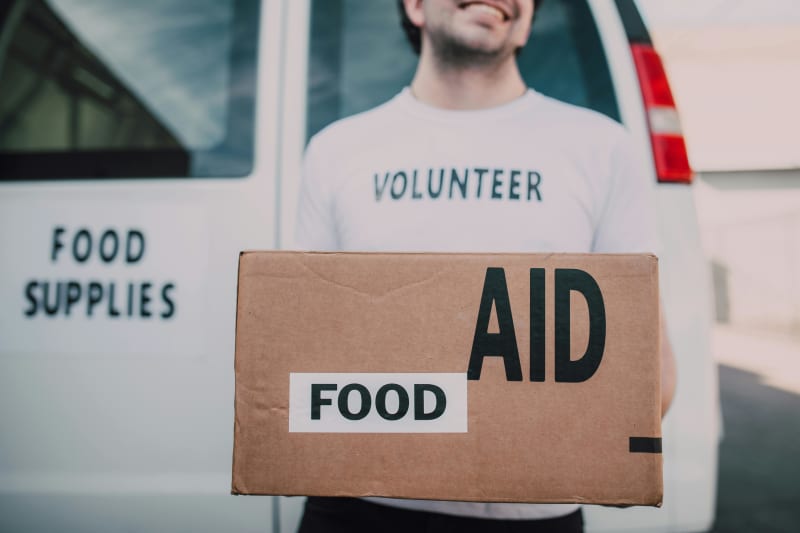
Yes, when deployed beyond individual use. Here are the verified results.
Fundraise Up's AI donation forms convert at 29%, compared to the M+R Benchmarks 2025 industry standard of 11%. Their AI-suggested gift amounts increased average donation amounts by 4.2% in controlled A/B tests (p-value < 0.001). Their adaptive cost coverage feature lifted revenue per user by 6.96%, and 82% of donors cover transaction fees when AI-optimized prompts are used. The platform now serves 3,000+ nonprofits including the Canadian Red Cross and Salvation Army UK.
DonorSearch's predictive AI analyzes over 1 billion data points to score donor likelihood. Mature DSAi clients have seen up to 85% increases in mail response rates. One client reduced mailing volume by 75%, saved $50,000 in postage and printing, while simultaneously raising annual fund revenue by 10%.
GoFundMe Pro's Intelligent Ask Amounts tested across 5.2 million sessions during the 2024 giving season produced a 4.5% increase in donation revenue.
At the sector level, Nonprofit Tech for Good's 2026 analysis found that organizations with AI-integrated fundraising strategies report 20-30% increases in donations through personalized outreach and improved targeting.
Email is still the primary channel. M+R Benchmarks 2025 data shows 48% of donors prefer email for updates and appeals. The average nonprofit email open rate sits at 28.59%, well above the for-profit average of 21%. But nonprofits sent 9% more emails in 2024 while generating 20% less revenue per 1,000 messages. Volume without personalization is hitting diminishing returns. AI-driven segmentation and send-time optimization are the fix for that curve.
Fundraising and accounting go hand in hand for nonprofits tracking restricted funds and grant budgets. BookBot automates transaction categorization and financial reporting for $199.
AI for Grant Writing: 30-Hour Proposals at Machine Speed
A single grant proposal takes 30 to 50 hours to write manually. For a small nonprofit with one development officer juggling donor relations, events, and grant applications, that timeline is brutal.
AI grant writing tools don't eliminate the human review. But they get you most of the way there. Organizations using AI-assisted grant writing tools saw a 30% increase in success rates compared to traditional methods, according to a study cited by the Technology Association of Grantmakers. William and Mary University doubled their monthly grant submission rate from 30 to 70 applications using AI assistance.
Tools worth knowing about:
- GrantBoost ($19.99/month Pro plan) generates custom proposals combining organizational details with industry best practices
- Grantable specializes in preserving your organization's voice by learning from your previous proposals and organizational documents
- Instrumentl provides end-to-end grant lifecycle management with an AI drafting module launched in 2025
One important caveat: 23% of foundations currently won't accept grant applications with AI-generated content, according to Nonprofit Tech for Good's 2026 data. Another 67% haven't decided on their policy. Human editing isn't optional. It's required for every submission.
What About Understaffed Teams?
This is where AI's value is clearest. The nonprofit sector's staffing numbers explain why automation matters:
- 75% of nonprofits reported persistent job vacancies in 2023, particularly in program delivery (National Council of Nonprofits)
- 59% of U.S. nonprofits have annual budgets under $50,000 (Council of Nonprofits, FY2024)
- 95% of nonprofit leaders cited burnout as a concern in 2024 (Center for Effective Philanthropy)
- 47% of respondents identified donor acquisition as their greatest challenge, a 10-point jump from 2023 (M+R Benchmarks 2025)
Organizations with budgets under $100,000 typically have zero dedicated fundraising staff. The executive director handles donor relations, grant writing, events, programs, and operations. AI doesn't replace a development team. But it does make a one-person operation function more like a three-person one.
Bloomerang's AI content assistant saves content creators an average of 12.2 hours per week, according to their internal data. For a development director who spends half their time writing donor communications and the other half on grant applications, reclaiming 12 hours a week changes what's possible.
And 67% of online donors agree that nonprofits should use AI to assist in marketing, fundraising, and administrative tasks, according to Nonprofit Tech for Good's 2026 survey. Donor acceptance isn't the barrier. Implementation is.
How to Start Using AI for Your Nonprofit This Quarter
The nonprofit CRM market is projected to reach $7.35 billion by 2031, up from $4.25 billion in 2024. The tools are maturing fast. Here's a practical path:
-
Audit your donor data first. Before choosing a tool, know what you're working with. How many active donors? What's your retention rate? Where do most donors lapse? The answers shape which AI features matter most for your organization.
-
Pick one tool, not five. If retention is your biggest problem, start with Bloomerang ($125/month) for predictive lapse detection. If donation conversion is the issue, test Fundraise Up (4% per transaction, no monthly fee) on your donation pages. Don't try to automate everything at once.
-
Start with email personalization. Emails with personalized subject lines are 26% more likely to be opened. Personalized calls to action convert 202% better than generic ones. Most CRM tools can do this out of the box with minimal setup.
-
Set up lapsed donor alerts. The average nonprofit only reactivates 9.8% of lapsed donors. AI that flags at-risk donors before they lapse is the single highest-ROI automation for most organizations.
-
Use AI for grant first drafts, not final submissions. Feed the tool your past proposals, organizational data, and funder requirements. Edit the output thoroughly. Never submit AI-generated text without human review.
-
Create an AI policy. 76% of nonprofits don't have one, according to the TechSoup 2025 AI Benchmark Report. Even a one-page document covering approved tools, data privacy expectations, and human review requirements puts you ahead of most organizations.
The nonprofits seeing the best results from AI aren't the ones with the biggest budgets. They're the ones that deploy it with shared workflows across the team instead of leaving it to individual staff members. The Virtuous 2026 report found 81% of nonprofits use AI individually without organizational strategy. Closing that gap is where the real gains start.
For more on automating financial workflows in small organizations, see how AI handles bookkeeping for small businesses.
Automiva builds AI tools that help small organizations and independent teams work faster. If donor management, grant writing, and outreach are stretching your team thin, we can help.