AI for Restaurants: Reservations, Online Orders, and Guest Communication Automation

The average high-demand restaurant gets 800 to 1,000 phone calls a month. Only about 10% of those turn into reservations. The rest are questions about hours, menu items, dietary accommodations, directions, and calls that ring out because nobody picks up during the dinner rush. Two-thirds of Americans say they'd avoid a restaurant that doesn't answer its phone promptly. That's not a minor inconvenience. That's revenue walking out the door before it ever walks in.
And it's not just phone calls. Online orders that go unconfirmed, reservation no-shows without automated reminders, and review responses that sit unanswered for weeks. These aren't technology problems. They're communication problems. AI is finally good enough to fix them without requiring a six-figure budget or an IT department.
The Reservation Problem Nobody Talks About
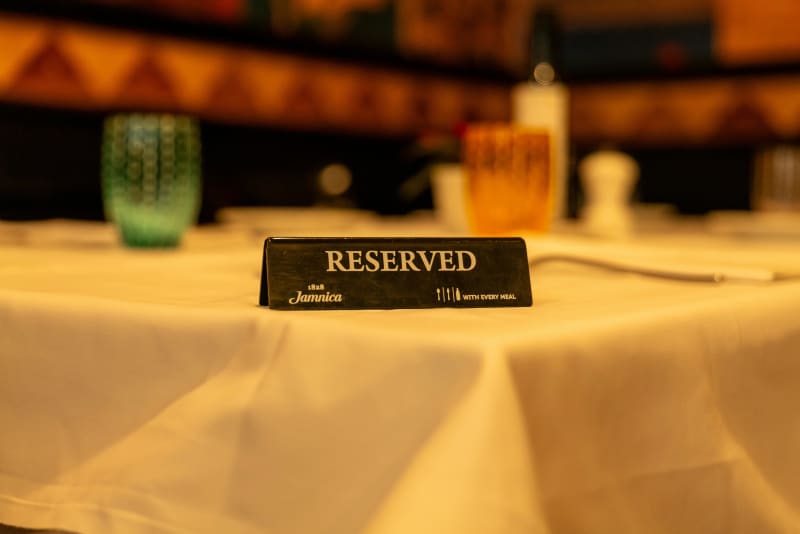
Here's what reservation management actually looks like at most independent restaurants: a host stand with a paper book or a basic iPad app, a phone that rings during service when every staff member has their hands full, and a voicemail box that fills up on Friday nights.
More than 25% of diners now make reservations exclusively online (SevenRooms, 2024). Restaurants without a reliable online booking system aren't just inconveniencing those customers. They're invisible to them.
But the real cost isn't lost bookings. It's no-shows. A 50-seat restaurant running two turns on a Friday night with a 15% no-show rate loses 15 covers. At $45 average check, that's $675 in a single evening. Over a year, that's $35,000 in revenue that vanished because nobody sent a confirmation text.
AI reservation tools attack this from two angles:
-
Automated confirmations and reminders. AI systems send personalized SMS and email confirmations immediately after booking, then follow up 24 hours and 2 hours before the reservation. One fine-dining operator using AI-automated reminders saw no-show rates drop 40% (Hermetic AI, 2025). Not generic "your reservation is tomorrow" messages, but personalized texts that include the guest's name, party size, and a one-tap confirm/cancel button.
-
AI phone hosts that answer every call. Voice AI platforms like Popmenu Answering, Hostie AI, and Loman AI pick up the phone 24/7, handle reservation requests, answer menu questions, and route complex calls to staff. Burma Food Group reported a 141% increase in phone-booked covers after deploying an AI virtual concierge (Hostie AI, 2025). Max's Restaurant processed 329,000 calls through Popmenu Answering and attributed $1.5 million in online orders to that single channel.
If your staff is too busy during service to answer the phone, those calls turn into lost revenue. MenuMind helps restaurants automate front-of-house operations, starting at $149.
What AI Reservation Platforms Actually Cost
Let's get specific on pricing, because "contact us for a quote" doesn't help anyone planning a budget.
| Platform | Type | Monthly Cost | Best For |
|---|---|---|---|
| Yelp Guest Manager | Booking + waitlist | $129 (Basic) to $299 (Plus) | Restaurants wanting Yelp integration |
| OpenTable | Booking + marketplace | $149 to $499 + $1.00-$1.50/cover | Restaurants that need new diner discovery |
| SevenRooms | CRM + booking | ~$700-$1,000 (reported) | Data-driven operators, multi-unit |
| Popmenu Answering | AI phone + marketing | $299 (bundled) to $499 (Premier) | Full marketing + phone automation |
| Hostie AI | AI voice phone | From $199, no setup fee | Independent restaurants, budget-conscious |
| Loman AI | AI voice phone | $149 + $0.75-$1.25/call + setup | High call volume restaurants |
Two things stand out.
First, OpenTable is the only platform that actively drives new covers to your restaurant through its consumer marketplace. But you pay per cover for it. A restaurant processing 500 network covers a month at $1.25 each spends $625 on top of the subscription. That model works if OpenTable is genuinely bringing you new customers. It doesn't work if most of those covers would have booked directly anyway.
Second, the AI voice phone category barely existed two years ago. Now there are multiple vendors competing below $300/month, and the ROI math is simple: if the system books even 20 additional covers a month at $45 average check, it's paid for itself three times over.
How AI Changes Online Ordering
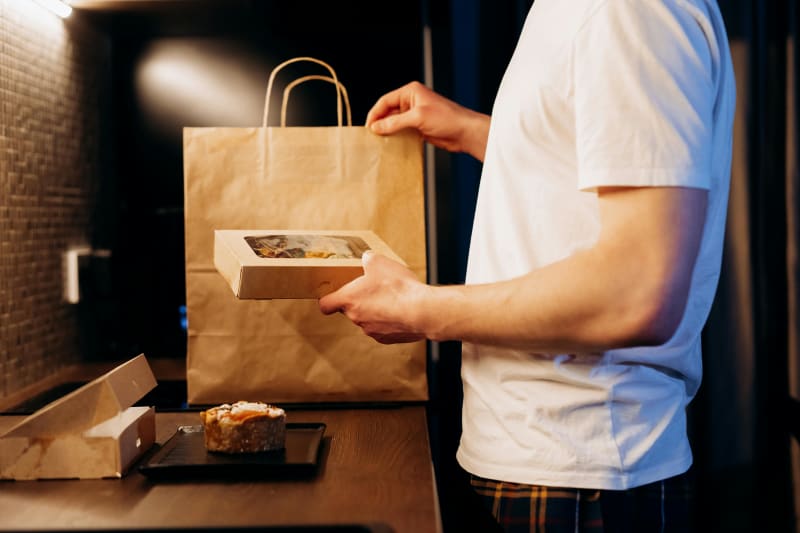
Online ordering has a dirty secret: 24% of restaurants fail to confirm orders with pickup times, and 70% don't notify customers when orders are ready (GloriaFood, 2024). These aren't technology failures. They're operational gaps that AI fills automatically.
The bigger problem is margin compression from third-party delivery. DoorDash, Uber Eats, and GrubHub charge up to 30% commission per order. On a $30 order with a 30% food cost, a 30% platform commission leaves the restaurant with roughly $12 before labor, rent, and everything else. For many operators, third-party delivery is a break-even proposition at best.
AI-powered direct ordering changes that math entirely.
Toast ($69/month per location) now includes AI-powered menu insights and is testing generative AI for staffing optimization. More importantly, it processes orders at 2.49% + $0.15 per transaction instead of 30%. On that same $30 order, the restaurant keeps $29.21 instead of $21.
Square for Restaurants launched AI Voice Ordering in late 2025, an AI system that answers 100% of incoming calls, handles menu questions, processes modifications, and takes payment over the phone. No human intervention needed for routine orders.
Olo powers digital ordering for chains like Wingstop, Shake Shack, and Dine Brands, with 11 documented AI use cases including voice AI for drive-thru and call-in orders, ML-based fraud detection, and demand forecasting.
For independent restaurants, the play is simple: get customers ordering directly through your own platform instead of through a third-party app. AI makes that viable by handling the operational overhead that used to justify paying 30% commission.
What the Big Chains Learned (So You Don't Have To)
Not every AI deployment goes smoothly. Learning from the chains saves you money and embarrassment.
Dine Brands (Applebee's + IHOP) announced in June 2025 that they're implementing Voice AI Agents to handle phone orders across both brands. They waited until the tech was mature enough. Smart.
White Castle deployed SoundHound AI voice bots across 100 drive-thru lanes by end of 2024. The key: they started with a limited menu of frequently ordered items and expanded as accuracy improved.
McDonald's took the opposite approach. They deployed IBM's voice AI across 100+ U.S. drive-thrus, and it went viral for the wrong reasons. The system tried to add 260 chicken nuggets to an order and put bacon on ice cream. McDonald's pulled the plug in 2024. They're now rebuilding with Google Cloud across 43,000 locations, but the lesson is clear: rushing AI into customer-facing roles without adequate testing destroys trust fast.
Thinking about automating your restaurant's operations? Start with the back-of-house workflows that customers never see, then expand to customer-facing tools once the system proves itself.
Guest Communication: The Revenue You're Leaving on the Table
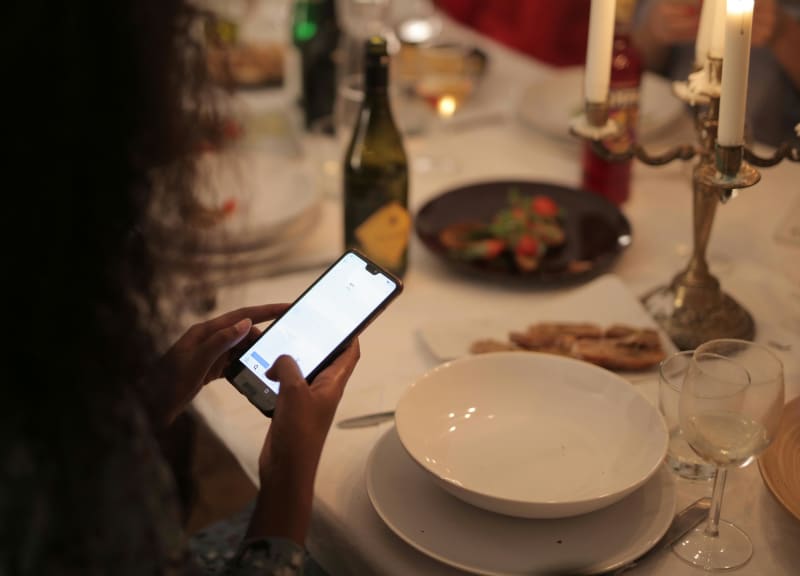
Guest communication covers everything after the booking: pre-visit texts, post-meal feedback requests, review responses, loyalty nudges, and win-back campaigns for lapsed regulars. Most independent restaurants do almost none of this.
The numbers make the case. 45% of consumers have abandoned a restaurant because of a poor digital experience. 30% of restaurants now use chatbots for automated guest interactions (VLink, 2024). And Starbucks, which runs the most sophisticated AI guest communication system in the industry, saw its mobile order and pay transactions hit 30% of all orders while its AI recommendations drove a 12% lift in average check size (Starbucks earnings, 2024).
You don't need Starbucks' budget. But the principles translate directly.
Automated review responses are the lowest-hanging fruit. Every unanswered Google or Yelp review is a missed opportunity to show future customers you care. AI tools generate contextual, on-brand responses within minutes of a review posting. The responses aren't perfect (you should still scan them before publishing), but they're infinitely better than silence.
Post-visit feedback collection turns your communication into a data pipeline. Instead of hoping customers leave a public review, AI sends a private satisfaction survey 2 hours after the meal. Happy customers get prompted to leave a Google review. Unhappy customers get routed to a manager who can recover the relationship before it becomes a one-star review.
Personalized re-engagement is where the real money lives. A customer who visited three times in two months and then disappeared for six weeks? AI flags them and sends a personalized "we miss you" message with a specific offer based on their order history. Not a generic coupon blast. A message that references their usual order.
How to Pick the Right Tools for Your Restaurant
Here's our honest recommendation based on restaurant size and budget.
Single-location, under $1M revenue:
- Start with Yelp Guest Manager Basic ($129/month) for reservations
- Add an AI phone system like Hostie AI ($199/month) if you're missing calls during service
- Use your POS's built-in online ordering instead of DoorDash/Uber Eats for regulars
- Total investment: $328/month. Break-even if it saves 8 covers/month
1-3 locations, $1M-$5M revenue:
- OpenTable Core ($299/month) or SevenRooms for reservation management with CRM
- Popmenu ($299/month) for AI phone answering plus marketing automation
- Toast or Square for direct online ordering with AI insights
- Total investment: $600-$800/month. Break-even if it saves 15-20 covers/month
4+ locations or $5M+ revenue:
- SevenRooms for advanced guest data and personalization
- Olo for enterprise-grade digital ordering
- Dedicated voice AI with custom integration
- Total investment: $1,000-$2,000/month. The ROI math is obvious at this scale
One thing across all sizes: don't try to automate everything at once. Pick the communication channel that's costing you the most money (usually missed phone calls or no-shows) and fix that first. Layer on additional automation after you've proven ROI on the first tool.
What AI Still Can't Do for Your Restaurant
It would be dishonest to pretend AI solves everything. Here's where the technology falls short.
Complex dietary conversations. A guest with multiple severe allergies needs a human who can walk through the menu item by item. AI voice systems can flag the allergy and transfer the call, but they shouldn't be making safety-critical claims about ingredients.
Emotional service recovery. When a guest is furious about a wrong order or a bad experience, AI-generated responses feel hollow. These situations require a human who can listen, empathize, and make it right on the spot.
Neighborhood-specific context. AI doesn't know that the jazz festival next weekend always doubles your Saturday reservations, or that your block floods during heavy rain and you need to proactively contact guests. Local knowledge still requires a human.
Cultural nuance in communication. Tone, humor, and formality vary enormously across restaurant types. A chatbot that works for a fast-casual taco joint will feel wrong at a fine-dining French restaurant. Customization takes time.
The operators getting the best results treat AI as their most reliable staff member for repetitive, predictable tasks, and they keep humans on the interactions that require judgment, empathy, or improvisation.
Getting Started This Week
If you've read this far and you're thinking "this sounds like a lot," here's the simplest possible starting point.
- Count your missed calls. Most phone systems can show you how many calls went unanswered last week. Multiply that number by your average check. That's roughly what you're leaving on the table.
- Audit your no-show rate. Pull your reservation data from the last 30 days. If more than 10% of reservations are no-shows, automated confirmations will pay for themselves immediately.
- Check your third-party commission costs. Add up what you paid DoorDash, Uber Eats, and GrubHub last month. If it's over $500, a direct ordering system will save you money within 60 days.
- Pick one tool and run it for 30 days. Don't sign annual contracts. Most platforms offer monthly billing. Test one, measure the impact, then decide.
79% of restaurant operators have already implemented or are considering AI for their operations (Popmenu, 2024). The gap between restaurants that automate communication and those that don't will only get wider. The technology is mature, the pricing is accessible, and the ROI is measurable within weeks, not years.
Want to see what else you can automate beyond reservations and orders? Automiva builds AI tools for restaurants and small businesses that handle the operational work eating into your margins.