AI for Salons and Spas: Booking Automation, No-Show Reminders, and Client Retention

More than half of first-time salon visitors never come back. Not because the haircut was bad. Because nobody followed up, the rebooking conversation didn't happen at checkout, and by the time they thought about scheduling again, they just picked whoever showed up first on Google.
That statistic comes from Boulevard's analysis of 11 million appointments across 30,000 businesses: the average salon converts only 45% of first-time visits into a second appointment. Top-performing salons hit 70%. The difference between those two numbers is the difference between a salon that grows and one that spends all its revenue replacing clients who quietly left.
AI tools for salons and spas are targeting three specific problems: automating the booking process so clients can schedule anytime, sending reminders that actually prevent no-shows, and building retention systems that keep clients coming back on schedule. Here's what the technology does, what it costs, and whether the math works.
How AI Booking Automation Works for Salons
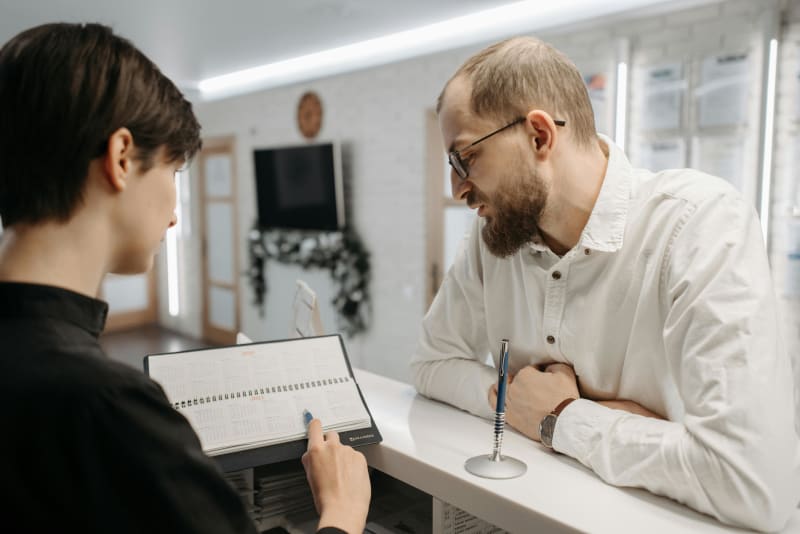
The front desk is the bottleneck. Your team is checking clients in, answering the phone, handling walk-ins, processing payments, and trying to squeeze in a quick consultation. Zenoti's industry data shows that 37% of salon calls go unanswered, and 82% of those missed calls happen during business hours when staff are busy with in-person clients.
Here's the number that should concern every salon owner: 81% of clients call outside normal business hours, according to Zenoti's 2024 Consumer Survey. If you're relying on a human to answer the phone, you're missing the majority of booking attempts before your team even shows up for work.
AI booking tools solve this in a few ways:
24/7 online scheduling lets clients book at 11 PM on a Sunday if that's when they decide they need a trim. Boulevard's data shows that 46-50% of all bookings happen when salons are closed. Clients who book their first appointment online return for a second visit 78% of the time, compared to just 39% for walk-ins. That's a 2x improvement in first-visit retention from changing nothing about the service itself.
AI receptionists handle phone calls, answer common questions ("Do you take walk-ins?" "How much is a balayage?"), and book appointments directly into your scheduling system. Zenoti launched its AI Receptionist in 2024, and Spa 35 owner Warren Danforth reported that "the longer we are on AI Receptionist, the more customers like it." The system handles 25 simultaneous calls, something no human receptionist can do.
Smart waitlist management fills last-minute cancellations automatically. When a 2 PM color appointment cancels, the system texts everyone on the waitlist who wanted that time slot. First to respond gets it. No staff phone calls required.
Stylist matching remembers client preferences. Clients who request a specific stylist spend 30% more per visit than those who don't, according to Boulevard's retention report.
What Salon Scheduling Software Costs
Pricing varies from free to enterprise-level. Here's the real breakdown:
| Platform | Starting Price | Best For |
|---|---|---|
| Square Appointments | Free (solo) | Solo stylists on a budget |
| Fresha | $19.95/month | New and growing salons |
| GlossGenius | $24/month | Independent pros and small teams |
| Vagaro | $25/month | Mid-size salons wanting all-in-one |
| Booksy | $29.99/month (1 user) | Salons wanting marketplace exposure |
| Boulevard | ~$130/month avg | Multi-location and marketing-focused |
| Mangomint | $165/month | Established salons (6+ staff) |
| Phorest | Custom pricing | Data-driven retention focus |
| Zenoti | Custom pricing | Enterprise chains (30,000+ customers) |
Transaction fees run 2.6-2.9% across most platforms. Booksy charges about $20/month per additional staff member. Mangomint includes most features in its base price but excludes memberships and auto-billing from the Essentials tier.
For a solo stylist, Square Appointments or Fresha at under $20/month is the obvious starting point. For a 6-person salon, expect to spend $100-$200/month on a platform that covers booking, reminders, and basic marketing automation.
If your salon collects reviews but nobody has time to respond to them, ReviewReply automates review responses across Google and other platforms for $99. 78% of potential clients check reviews before booking, and unanswered reviews drive prospects to competitors.
How Automated Reminders Cut No-Shows by 30-50%
The average salon no-show rate falls between 15% and 30%. At an average ticket of $80-$150, a single daily no-show costs $29,000-$55,000 per year. And 36% of no-shows happen for the simplest reason: the client forgot.
Automated reminders fix the forgetting problem. The data is consistent across multiple studies:
Togninis Hair in Brisbane implemented automated SMS reminders through Phorest and dropped their no-show rate to 2%. They reported a 10,000% ROI on Phorest's rebooking reminder tools.
Beauty Secrets, a 5-location salon group in southern England, achieved below 2% no-shows with automated appointment reminders and a 1,647% return on investment from automated rebooking campaigns.
Industry-wide, automated reminder systems reduce no-shows by 30-50% for beauty and wellness businesses, with some salons reporting reductions as high as 90% when combining reminders with cancellation policies.
The most effective reminder sequence uses three touchpoints:
- Booking confirmation sent immediately after scheduling
- 48-hour reminder giving clients enough time to reschedule if needed (and enough time for you to fill the slot from the waitlist)
- Morning-of notification with arrival time and any prep instructions
SMS is the backbone. Text messages have a 98% open rate compared to 21% for email. Two-way SMS reminders (where clients can confirm or cancel by replying) reduce no-shows 23% more than one-way messages, according to the Journal of General Internal Medicine. And sending reminders at 6 PM delivers a 41.4% higher confirmation rate than sending at noon.
Every reminder should include a one-tap reschedule link. A rescheduled appointment is always better than a no-show. The goal isn't to guilt clients into showing up. It's to make it easy to rebook if their plans changed.
Why the Second Appointment Is the Only Metric That Matters
Boulevard's retention report uncovered a pattern that should reshape how salons think about growth: 70% of clients who complete a second appointment go on to book a third. But only 45% of first-time visitors ever make it to that second appointment.
That second visit is the tipping point. Once a client comes back twice, they're likely yours for years. The average lifetime value of a salon customer over ten years exceeds $3,000, not counting product sales and referrals. But you can't access that lifetime value if you lose them after visit one.
Top-performing salons don't just attract more new clients. They retain 56% more first-time visitors than average, and they rely on first-time visitors for less than 10% of their total revenue. Average salons need twice as many new clients to generate the same revenue, which means spending 5-25x more on acquisition than retention would cost.
AI retention tools automate the follow-up that converts first visits into second visits:
Pre-booking at checkout. The best salon software prompts stylists to book the next appointment before the client leaves. If they decline, an automated text goes out 24 hours later suggesting specific times.
Service-based rebooking reminders. The system calculates when a client should return based on their service. Haircuts in 4-6 weeks. Color in 6-8 weeks. Facials monthly. When the rebooking window opens, an automated message goes out with a direct booking link.
Lapsed client campaigns. Phorest's "Reconnect" feature identifies clients who've broken their normal attendance pattern and sends automated outreach. Many salons report significant re-engagement from clients who simply needed a reminder, not a new salon.
Managing leads from multiple channels? LeadLens scores and prioritizes incoming prospects for $249, so your team focuses on potential clients most likely to book rather than chasing every inquiry equally.
How Online Reviews Drive (or Kill) New Client Acquisition
Zenoti's 2024 Consumer Survey of 1,400+ salon and spa clients found that 78% check reviews before booking, and nearly half will only consider businesses rated 4.5 stars or higher.
That means a salon with a 4.3-star rating is invisible to half its potential market. And it gets worse: one in two clients has avoided a provider specifically because of poor or unanswered reviews, according to Birdeye's 2025 data. Not just low ratings. Unanswered reviews.
Automated review collection changes the math:
- Review volume increases 30-50% compared to manual requests
- Automated text requests after appointments get 25-35% response rates versus 5-10% when staff ask manually
- Salons with 300+ reviews see call volume double or triple compared to those under 100
The timing matters. Send the review request within 2 hours of checkout, while the client still feels great about their new look. Direct to Google first, since Google dominates local search results for salon queries. If the client had a bad experience, a satisfaction check should catch that before it becomes a public review.
Google's local search algorithm weights review quantity, recency, and average rating. Salons ranking in the top 3 local results average 78 reviews at 4.4+ stars. Those in positions 4-10 average 31 reviews. That gap determines who gets found and who doesn't.
What to Look for When Choosing Salon AI Tools
Not every platform deserves your subscription fee. Here's what separates useful tools from expensive dashboards:
Integration with your booking system is non-negotiable. If the AI tool doesn't connect to your existing scheduling platform, you'll spend more time on workarounds than you save. Zenoti, Vagaro, Mangomint, and Boulevard all offer built-in AI features. Third-party tools like BookingBee integrate with Meevo, Mindbody, and others. Check compatibility before you commit.
Automation that triggers real actions, not just reports. A system that tells you "Client X hasn't visited in 8 weeks" is less useful than one that automatically sends Client X a rebooking text with available times. Ask what happens after the AI identifies something. If the answer is "you get a notification," that's just a fancy alert system.
Transparent pricing. GlossGenius at $24/month, Vagaro at $25/month, and Mangomint at $165/month all publish their pricing. Zenoti and Phorest require demos. "Custom pricing" usually means expensive, so budget accordingly.
Mobile-first design. Your stylists aren't sitting at desktops between clients. The platform needs to work well on a phone. Mangomint consistently earns the highest user satisfaction ratings (4.95/5 on Capterra) largely because of its mobile experience.
The Bottom Line on AI for Salons and Spas
The U.S. hair salon market hit $60.6 billion in 2024, with about 1.05 million salons competing for clients. The salon and spa software market itself is projected to nearly triple, from $123 million in 2024 to $350 million by 2033, growing at 12.3% annually. The tools are getting better and cheaper.
But the underlying problem hasn't changed: most salons lose more than half their first-time clients, miss a third of incoming calls, and leave hundreds of thousands of dollars in lapsed-client revenue sitting in their databases.
A salon that reduces no-shows from 20% to 5% on a 10-provider team can recover over $50,000 in annual revenue. A salon that increases first-visit retention from 45% to 70% cuts its new client acquisition costs in half. And a salon that captures after-hours bookings that currently go unanswered adds revenue without adding a single new marketing dollar.
Start with automated reminders. That's the highest-ROI move for most salons, and nearly every scheduling platform includes them. Then add online booking if you haven't already (only about 26% of salons offer it, according to NexHealth). Then tackle rebooking automation and review collection.
The technology is table stakes in 2026. The question is whether you're using it to its full potential.
Want to see what else you can automate beyond booking and reminders? Automiva builds AI tools for small businesses across dozens of industries, including salon and spa operations.