AI Consulting Services vs AI Implementation: Which Do You Need?
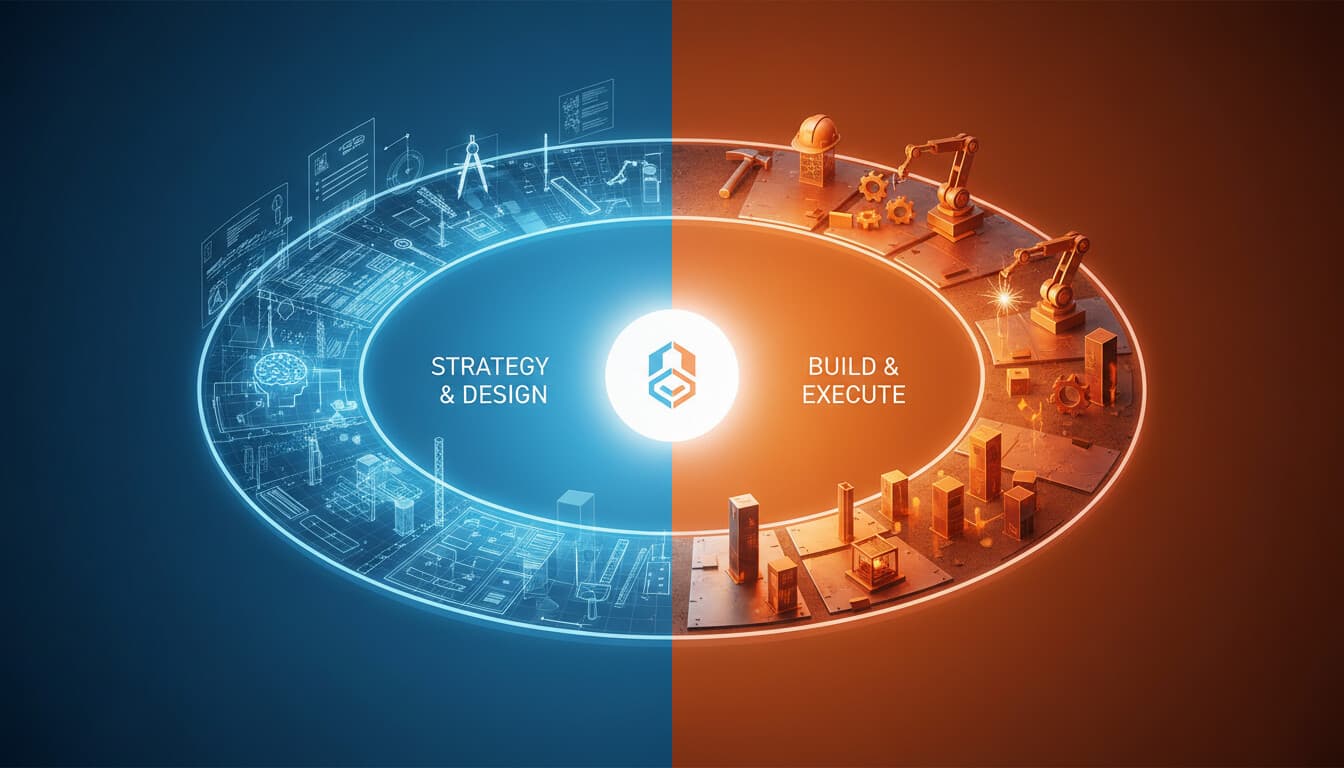
Two types of companies offer to help you with AI: consultants who advise on strategy, and implementers who build solutions. Some do both. Understanding the difference helps you hire the right help and avoid paying for services you don't need.
AI consulting services focus on strategy and planning. What should you do with AI? Where will it create the most value? What's the roadmap? AI implementation services focus on execution. Building the actual solutions, integrating them with your systems, and getting them working.
Let's break down when you need each.
What AI Consulting Services Actually Do
AI consultants help you figure out what to do before you do it. Their work typically includes several key activities.
AI Readiness Assessment
Evaluating whether your organization is prepared for AI adoption. This covers data availability and quality, technical infrastructure, organizational culture and skills, and potential barriers and risks.
The output is usually a report detailing where you stand and what needs to change before AI projects can succeed.
Opportunity Identification
Finding the places in your business where AI could add value. Good consultants don't just list possibilities. They prioritize based on potential impact, feasibility, and alignment with your strategy.
This might involve interviewing stakeholders across departments, analyzing your processes and data, and benchmarking against industry practices.
Strategy Development
Creating a roadmap for AI adoption. Which opportunities to pursue first? What capabilities do you need to build? How does AI fit with your broader technology and business strategy?
Strategy work should produce actionable plans, not just pretty slide decks.
Vendor Evaluation
If you're buying AI tools or services, consultants can help evaluate options. They know the market, understand technical requirements, and can help you avoid vendors who oversell.
Change Management Planning
AI changes how people work. Consultants help plan for the organizational side: training, communication, role changes, and managing resistance.
Governance and Ethics
For larger organizations, consultants help establish AI governance frameworks. How will you ensure AI is used responsibly? Who decides what's acceptable? What oversight mechanisms exist?
What AI Implementation Services Actually Do
Implementers build and deploy AI solutions. Their work involves getting things working, not advising on what to do.
Solution Design
Translating business requirements into technical specifications. What exactly needs to be built? How will it work? What systems does it connect to?
Development and Configuration
The actual building. This might mean configuring off-the-shelf AI tools, training models on your data, writing custom code, or combining multiple components into a complete solution.
Integration
Connecting AI solutions to your existing systems. CRM, ERP, help desk, marketing platforms, databases, and whatever else needs to share data with the AI.
Testing
Verifying the solution works correctly. Testing performance, accuracy, edge cases, and failure scenarios before going live.
Deployment
Moving from development to production. Setting up infrastructure, migrating data, and going live with real users.
Training
Teaching your team how to use the new tools. Hands-on sessions, documentation, and ongoing support.
Maintenance and Optimization
After launch, keeping things running. Monitoring performance, fixing issues, and improving over time.
When You Need Consulting (Not Implementation)
Some situations call for strategic advice without necessarily building anything immediately.
You don't know where to start.
Your company wants to "do something with AI" but hasn't identified specific opportunities. You need someone to analyze your business and identify where AI makes sense.
A consultant can map your processes, evaluate your data assets, and recommend the highest-value opportunities. This prevents wasting money building the wrong things.
You need organizational alignment.
AI initiatives that don't have executive support or cross-functional buy-in tend to fail. Consultants can help build the business case, align stakeholders, and create a shared vision.
Sometimes the real work is political, not technical.
You're planning a major transformation.
If AI is part of a broader digital transformation, strategic consulting helps ensure AI efforts align with overall goals. Piecemeal implementation without strategy leads to fragmented, redundant systems.
You need independent evaluation.
You've received proposals from vendors or implementation partners and want an objective perspective. Consultants without an implementation agenda can help evaluate options honestly.
You're concerned about risk or governance.
Larger organizations, especially in regulated industries, may need help establishing AI governance before building anything. Getting the framework right first prevents problems later.
When You Need Implementation (Not Consulting)
Other situations call for just building solutions without extensive strategic work.
You know exactly what you want.
Your problem is well-defined. You've identified the AI solution. You just need someone to build and deploy it. Example: "We need a chatbot for customer support that integrates with Zendesk and Salesforce."
Paying for strategy consulting when you've already done the strategic thinking is wasteful.
You have internal strategy capabilities.
Large companies often have internal strategy teams. They can handle the "what should we do" question. They just need external help with the "how do we build it" part.
The opportunity is obvious.
Some AI applications are so clearly beneficial that extensive analysis isn't needed. If your support team is overwhelmed and you're clearly a good fit for an AI chatbot, get it implemented rather than studying whether you should.
You need speed.
Strategic consulting takes time. If you need results quickly and the path forward is reasonably clear, move straight to implementation.
When You Need Both
Many situations require both consulting and implementation, either from the same provider or different ones.
You're new to AI with serious ambitions.
First-time AI adopters who want to do it right often benefit from starting with strategy work, then moving to implementation. The strategy phase identifies the right projects and sets them up for success.
Complex, multi-phase initiatives.
Large AI programs often have ongoing consulting alongside implementation. As you implement phase one, consultants are planning phase two.
Organizational readiness gaps.
Sometimes assessment reveals that you're not ready to implement. You might need data quality work, infrastructure upgrades, or organizational changes first. Consulting identifies these gaps; then you address them before implementation.
How to Choose a Provider
Given the options, here's how to navigate hiring decisions.
Pure consulting firms
Big consulting firms (McKinsey, BCG, Deloitte, etc.) offer AI strategy consulting. They're strong on strategy and have senior talent but weak on actual implementation and very expensive (often $500 to $1,500+ per hour).
Best for: Large enterprises needing strategic transformation planning, board-level advisory, or vendor-independent evaluation.
Watch out for: Recommendations that are theoretically sound but practically difficult to implement. The consultants leave, and you're stuck figuring out execution.
Pure implementation shops
Development agencies and technical service firms that build AI solutions. Strong on execution, often weak on strategy, and sometimes push solutions toward what they know how to build.
Best for: When you have clear requirements and need execution, technical complexity that requires specialized skills, or ongoing development partnerships.
Watch out for: Implementers who build what you ask for rather than what you need. Make sure someone (internally or externally) has done the strategic thinking first.
Full-service providers
Companies that offer both strategy consulting and implementation. Smoother handoff from strategy to execution, single point of accountability, and potential conflicts (recommending work they'll get paid to build).
Best for: Mid-sized companies who want end-to-end support, projects where strategy and implementation are tightly coupled, and organizations without strong internal AI leadership. For more on this choice, see should you hire an AI automation consultant.
Watch out for: Providers who always recommend the maximum scope. Get a second opinion on strategic recommendations if the same company will implement them.
Warning Signs and Red Flags
Regardless of which type of service you need, watch for these warning signs.
Consultants who produce reports but no action. Strategy is only valuable if it leads to outcomes. If you're paying for analysis that sits on a shelf, you're wasting money.
Implementers who skip requirements gathering. Jumping straight to building without understanding your needs leads to solutions that don't fit.
Vague deliverables. Whether consulting or implementation, you should know exactly what you're getting. "AI strategy engagement" is too vague. "Assessment of 5 departments with prioritized opportunity roadmap" is specific.
Mismatched expertise. AI consultants should have both business acumen and technical understanding. Implementers should have both technical skills and business context. Be wary of pure technologists or pure strategists.
No reference customers. Ask for references from similar projects. If they can't provide them, question their experience.
Making the Decision
Here's a practical framework for deciding what you need.
First, answer these questions honestly. Do you know what AI opportunity you want to pursue? Do you have clear requirements for a solution? Do you have internal capability to develop strategy? Do you have the technical capability to build solutions?
If you don't know what opportunity to pursue, start with consulting. If you have clear requirements, move to implementation. If you need both strategy and execution and don't have internal capabilities, consider a full-service provider.
Whatever you choose, insist on clear deliverables, realistic timelines, and measurable outcomes.
How We Approach This at Automiva
We started as an implementation-focused company because we believe building working solutions is where value gets created. But we've learned that jumping to implementation without proper groundwork often backfires.
Now we offer both strategic assessment and implementation, but we're honest about what each client needs. Sometimes that means recommending you hire strategy consultants first. Sometimes it means skipping straight to building.
Our assessment process identifies specific opportunities with clear ROI before we propose implementation work. You get actionable recommendations, not just a report.
Want to explore what AI services make sense for your business? Learn about our process or contact us for a conversation. We'll tell you honestly whether you need strategy help, implementation help, or both.