AI Study Tools That Actually Work: Flashcards, Summaries, and Practice Tests from Any Material

Here's what I know: 83.6% of college students cram their study sessions, and 66% rely on rereading as their main strategy. Both rank among the least effective study methods ever tested, according to a landmark review by psychologist John Dunlosky published in Psychological Science in the Public Interest.
And 80% of students have never been taught how to study. Not in high school. Not in college orientation. Not ever. You spend 16+ years in school and nobody shows you the most basic skill you need to succeed in it.
AI study tools are changing this in a way that actually matters. Not by doing the studying for you, but by converting any material you throw at them into the formats that cognitive science says work best: flashcards with spaced repetition, practice tests with active recall, and structured summaries that force you to engage with the content instead of just staring at it.
Why Your Current Study Method Probably Doesn't Work
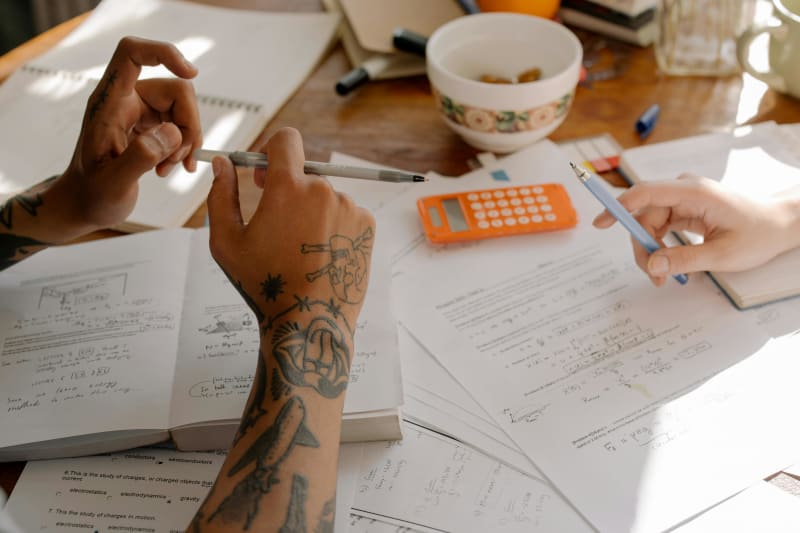
Let me back up for a second, because this is actually important to understand before you pick any tool.
The forgetting curve, first documented by Ebbinghaus and replicated in modern studies, shows that you forget about 40% of new information within a few days and nearly 90% within a month without review. That's not a personality flaw. That's how memory works.
The most popular study strategies (highlighting, rereading, summarizing) received a "low utility rating" in Dunlosky's review at Kent State University. They feel productive. They're not. Rereading creates what researchers call "the illusion of mastery," where familiarity gets mistaken for understanding.
What actually works? Two things, consistently, across hundreds of studies:
Active recall. Testing yourself on material rather than passively reviewing it. A meta-analysis by Adesope, Trevisan, and Sundararajan (2017) analyzed 272 independent effect sizes from 118 studies and found practice testing produced a mean effect size of 0.74 compared to other study methods. That's a large effect by any standard.
Spaced repetition. Spreading review sessions over time instead of cramming. Medical students using Anki's spaced repetition scored 6.4% to 12.9% higher across course exams compared to non-users, according to a 2025 study published in the Journal of Medical Education and Curricular Development.
The problem was always implementation. Making your own flashcards from a 300-page textbook takes forever. Scheduling your own spaced review sessions without software is a nightmare. AI tools fix the implementation problem.
How AI Study Tools Generate Your Materials
The process is simpler than most people expect. You upload something (a PDF, lecture recording, YouTube video, PowerPoint deck, or even a photo of handwritten notes) and the AI extracts key concepts and converts them into study materials.
Here's what happens under the hood:
- Content extraction. The AI parses your input into readable text. For videos, it transcribes the audio. For images, it runs OCR. For PDFs, it identifies headings, definitions, and key terms.
- Concept identification. NLP models pick out the most important information: definitions, relationships, processes, dates, formulas. Not everything on the page. Just the testable material.
- Format conversion. The extracted concepts get turned into whatever format you chose: flashcard pairs (question/answer), multiple choice questions, fill-in-the-blank, or structured summaries.
- Spaced repetition scheduling. If the tool supports it, your flashcards get scheduled using algorithms like SM-2 or FSRS, which track what you know well and what needs more review. FSRS, the newer algorithm used in RemNote and updated Anki versions, reduces required reviews by 20%+ compared to SM-2 while maintaining the same retention level.
The whole conversion takes minutes. What used to be an afternoon of flashcard creation becomes a 5-minute upload.
If you're spending hours making study materials by hand (or worse, just rereading your notes and calling it studying), StudyStack turns any uploaded material into flashcards, summaries, and practice tests for $99. It handles the conversion so you spend your time actually learning.
The AI Study Tools Worth Using Right Now
Not all study tools are created equal. Some have genuine AI features. Others slapped "AI" on their marketing page and called it a day. Here's what's actually worth your time in 2026.
| Tool | Price | Best For | Key Feature |
|---|---|---|---|
| Anki | Free (desktop), $24.99 iOS | Spaced repetition purists | SM-2/FSRS algorithm, massive community decks |
| Knowt | Free | Budget-conscious students | AI flashcards + quizzes from notes |
| RemNote | Free / $8/month Pro | Note-takers who want integrated flashcards | Notes auto-convert to flashcards |
| Quizlet | $35.99/year | Quick sessions, group study | Q-Chat AI tutor, 500M+ study sets |
| TurboLearn | $5.99-$12.99/month | Multi-format learners | Accepts PDF, video, audio, handwritten notes |
| Brainscape | $7.99/month (annual) | Certification and exam prep | Confidence-based repetition |
| Scholarcy | $4.99/month | Graduate students, researchers | Extracts key findings from academic papers |
My honest take: If you're a medical student or studying for any high-stakes exam, Anki is still the best tool. Period. 94% of first-year medical students at some institutions use it. The r/medicalschoolanki community has over 109,000 members, which is more than the roughly 89,000 active U.S. medical students. It's free, endlessly customizable, and the spaced repetition algorithm has the most research behind it.
If you want something faster with less setup, Knowt is the best free option. It generates flashcards and quizzes from uploaded notes automatically, and you can import your existing Quizlet sets directly.
Quizlet has 60 million monthly active users and pulled in $139 million in revenue in 2025 (GetLatka), so it's clearly doing something right. But here's the thing: a lot of users complain about features getting paywalled that used to be free. Their Trustpilot score sits at roughly 1.4/5 from 500+ reviews. Most of those complaints are about pricing changes, not the product itself.
For something that handles every format imaginable, TurboLearn takes PDFs, audio recordings, YouTube videos, PowerPoints, and photos of handwritten notes. It's the Swiss Army knife option if you're juggling different content types across courses.
Do AI Practice Tests Actually Improve Your Scores?

Short answer: yes, and the evidence is strong.
Visible Learning MetaX, which aggregates educational research, analyzed 744 studies involving 222,708 students (updated November 2024) and found practice testing produces a weighted mean effect size of 0.49. Anything above 0.4 is considered a meaningful positive impact on learning.
A separate 2025 meta-analysis published in ScienceDirect found AI chatbot-based study tools produced an even larger effect size of g = 1.05 on academic achievement. That's substantial.
But I should be honest about what the data also shows. A study at UNLV's medical school (2024) tracked 23 AI study tool users versus non-users across six exams and found no statistically significant difference. 82.4% versus 82.7%. Small sample, but it's a reminder that the tool doesn't study for you.
And Duke University research (2025) found something worth knowing: there's an inverted U-shaped relationship between AI use and actual performance. Moderate use helped. Excessive reliance showed diminishing or negative returns. The students who used AI to generate materials and then actively studied those materials did better. The ones who used AI as a substitute for studying did worse.
The takeaway? AI study tools are preparation tools, not shortcuts.
For structured learning guides and tutorials beyond just flashcards, Tutorial Generator creates step-by-step educational walkthroughs from any subject description for $99.
What AI Study Tools Get Wrong
I'm not going to pretend these tools are perfect. They have real limitations you should know about before relying on them for your next exam.
Hallucinated content. This is the big one. AI summaries can contain information that sounds right but isn't. A 2024 study in the Journal of Medical Internet Research found AI-generated literature reviews hallucinated references at rates exceeding 25%. When researchers checked 176 AI-generated citations across six reviews, nearly 20% were entirely fabricated and almost half of the real ones contained errors. For study materials, this means you need to spot-check AI-generated flashcards against your source material. Especially for specific dates, formulas, and definitions.
Context and connections. AI is great at extracting facts. It's less great at understanding why those facts matter or how they connect to other concepts. If your exam tests analysis, comparison, or application (not just recall), AI-generated flashcards only cover half the preparation.
The cheating gray zone. 53% of students are deterred from using AI by fear of being accused of academic dishonesty, according to the HEPI 2025 Student Generative AI Survey. Using AI to generate study materials is generally fine. Using AI to write your graded assignments is not. But the line isn't always obvious, and policies vary by institution. AI cheating incidents rose from 1.6 per 1,000 students in 2022-23 to 7.5 per 1,000 in 2024-25. Check your school's rules before you start.
Overreliance. 88% of UK students have used AI for assessments, up from 53% just one year prior (HEPI 2025). That pace of adoption is wild. The tools work best when they help you study harder, not when they help you avoid studying entirely.
How to Set This Up Without Overcomplicating It
Here's what I'd do if I were starting from scratch today.
Step 1: Pick one tool and commit for two weeks. Don't sign up for five platforms. If you're in a demanding program, start with Anki. If you want less setup, start with Knowt (it's free). Grad students reading academic papers all day should look at Scholarcy for $4.99/month.
Step 2: Upload one week's worth of material. Take your lecture notes, textbook chapters, or recorded lectures from this week. Upload them. Let the AI generate flashcards or practice questions. Review what it produced. Correct anything wrong. This trains both the tool and your own understanding of what good study material looks like.
Step 3: Actually use the spaced repetition schedule. This is the part most people skip, and it's the part that matters most. Don't just make flashcards and review them once. Let the algorithm tell you when to review each card. You see difficult cards more often and easy cards less often. Every 1,700 flashcards completed in Anki corresponded to a 1-point increase on USMLE Step 1, controlling for other factors. The system works if you use it consistently.
Step 4: Test yourself before the test. Generate practice questions from your material at least three days before any exam. Not the night before. Research shows that cramming for an extra 3 hours the night before almost doubled academic problems the next day, according to UCLA professor Andrew J. Fuligni's research on student study habits.
Step 5: Verify the AI's output. This isn't optional. Spend 10 minutes checking that AI-generated cards match your source material. Fixing errors is itself a form of active recall. You learn from the correction process, which is a bonus most people don't realize.
The Bigger Picture on AI and Studying
86% of students globally now use AI in their studies, with 54% using it weekly and 25% daily, according to the Digital Education Council's Global AI Student Survey. The question isn't whether AI study tools will become standard. They already are.
The AI in education market hit roughly $6-7 billion in 2025 and is projected to reach $32 billion by 2030 (Grand View Research). The tools are getting better, faster, and cheaper every semester.
But here's what hasn't changed: you still have to do the work. The best flashcard app in the world won't help if you don't open it. Spaced repetition only works if you show up for the review sessions. AI generates the materials. You do the learning.
Two out of three college students say mental health challenges negatively impact their studying several times a month or more, according to Kahoot's 2024 Study Habits Snapshot. Over 55% experience academic burnout. If AI study tools can cut your study prep time in half and make the hours you do spend more effective, that's not just an academic improvement. That's fewer late nights, less stress, and more time for everything else.
Automiva builds AI tools that automate the tedious stuff so you can focus on what actually matters. If you're tired of wasting study hours on methods that don't work, we can help.